
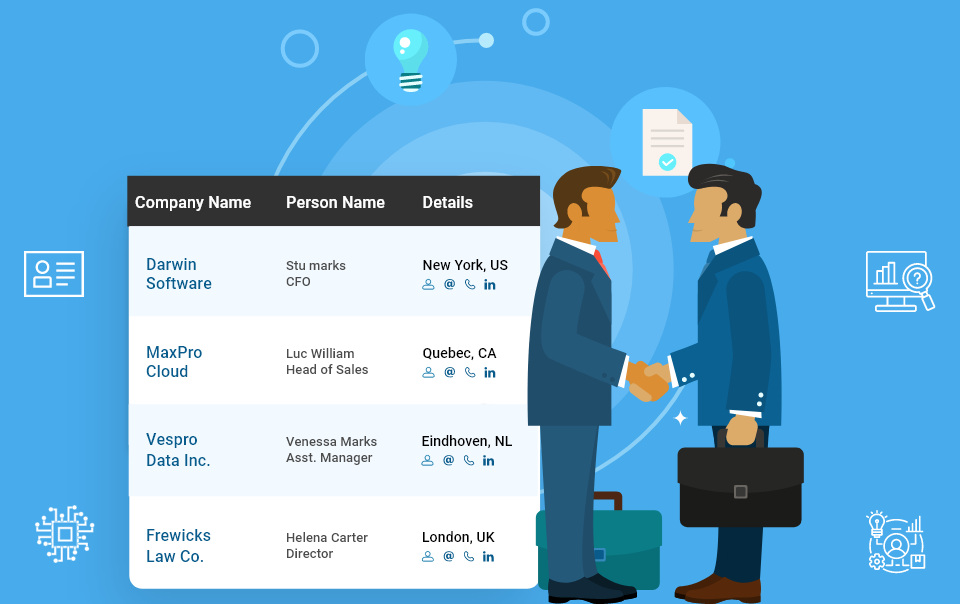
Most B2B sales teams don’t struggle because they lack tools or talent—they struggle because they’re working with the wrong data. Outdated contacts, missing decision-makers, and poor targeting lead to low reply rates and wasted outreach efforts. This is where b2b sales data plays a critical role.
When sales and marketing teams have access to accurate, verified data, they can reach the right businesses at the right time with relevant messaging. In this guide, we’ll break down what B2B sales contact database is, the key types, where it comes from, and how choosing the right provider can directly improve pipeline performance and revenue outcomes.
B2B sales database is the structured business information sales and marketing teams use to identify, target, and convert other businesses into customers. Unlike consumer data, it focuses on companies, job roles, and buying intent.
It commonly covers:
Using reliable b2b sales data helps teams:
When sales teams operate with clean, verified data, outreach becomes relevant, predictable, and scalable—rather than trial and error.
Most sales pipelines fail long before a pitch happens. The root cause is usually poor targeting—reps reach out to companies that aren’t ready, relevant, or even reachable. Strong b2b sales marketing list fixes this by giving teams clarity on who to contact and when.
When data quality is low, teams face:
With reliable data in place, teams can:
For modern sales teams, accurate data isn’t optional—it’s the foundation of consistent revenue and scalable growth.
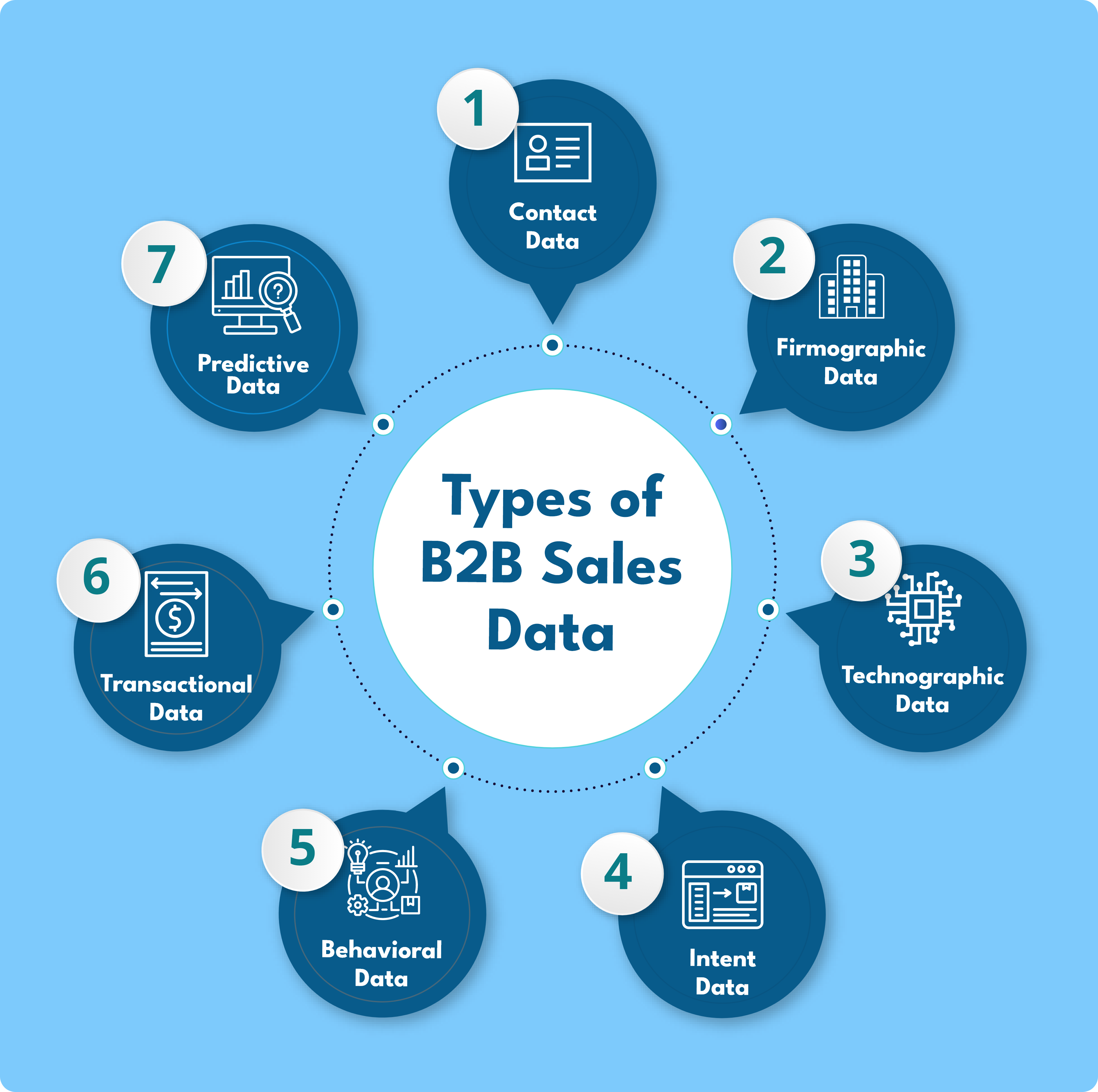
Understanding the different types of b2b sales data helps sales and marketing teams use the right information at the right stage of the funnel. Each data type solves a specific pain point—from poor targeting to bad timing.
This is the most basic and most used form of sales data.
Includes:
Why it matters:
Without accurate contact data, sales reps struggle to reach the right person. A clean b2b sales contact database ensures outreach reaches decision-makers instead of dead inboxes.
Firmographic data describes a company’s profile.
Includes:
Why it matters:
It helps teams qualify accounts faster and focus on companies that actually match their ideal customer profile, instead of chasing poor-fit leads.
This data shows what technology a company uses.
Includes:
Why it matters:
Sales teams can tailor pitches based on a prospect’s existing tech stack, making conversations more relevant and solution-focused.
Intent data reveals buying interest before prospects reach out.
Includes:
Why it matters:
It helps prioritize accounts that are actively researching solutions, improving timing and response rates.
Behavioral data tracks how prospects interact with your brand.
Includes:
Why it matters:
This data shows sales teams when to follow up and what messaging is most likely to convert.
This data focuses on past purchases and deal history.
Includes:
Why it matters:
Transactional insights support upselling, cross-selling, and account expansion strategies using a centralized b2b sales database.
Predictive data uses analytics and models to forecast outcomes.
Includes:
Why it matters:
It helps sales teams focus effort where deals are most likely to close, improving efficiency and forecast accuracy.
Not all sales data comes from the same place, and relying on a single source often leads to gaps, duplicates, or outdated records. Understanding data sources helps teams build a more reliable prospecting system.
This is data you collect directly from your own channels:
Limitation:
First-party data grows slowly and only reflects existing interest, not new opportunities.
This data comes from trusted partners:
Limitation:
Coverage is limited and depends on partner quality.
Third-party providers supply ready-to-use business data at scale.
Includes:
This is where many teams rely on a b2b sales leads database to accelerate outreach and fill pipeline gaps without waiting months for organic data growth.
Risk to watch:
Low-quality providers may offer outdated or non-compliant data, which can harm deliverability and brand trust.
Many teams start with free data sources, hoping to save costs. But as outreach scales, the limitations quickly surface—missing contacts, outdated records, and poor response rates.
Common sources include:
Challenges:
This often results in low-quality outreach and wasted sales hours.
Paid providers offer verified, ready-to-use datasets designed for scale.
Benefits include:
For growing teams, investing in b2b data for sale is less about cost and more about efficiency, accuracy, and predictable results.
Choosing paid data allows sales teams to focus on selling—not cleaning spreadsheets.
Low-quality data kills pipeline growth. Reach real decision-makers with accurate B2B sales data that drives revenue.
Not all data providers deliver the same value. Choosing the wrong one often leads to bounced emails, poor targeting, and compliance risks. To avoid these issues, businesses need to evaluate providers beyond just price or volume.
When selecting a provider, focus on the following:
Effective b2b sales data analysis helps teams identify what’s working, remove poor-performing segments, and refine targeting over time. Without analytical insight, even large datasets fail to deliver ROI.
Choosing the right provider means investing in data that supports smarter decisions—not just more records.
Choosing a reliable data partner is critical when accuracy, compliance, and targeting directly impact sales outcomes. This is where b2b sales data providers such as
DataCaptive stand out by focusing on quality rather than volume.
DataCaptive is designed for teams that want precision-driven outreach instead of generic lists. Its approach addresses common pain points such as bounced emails, poor segmentation, and compliance risks.
Key strengths include:
DataCaptive is especially useful for:
By focusing on relevance and compliance, DataCaptive helps teams engage the right prospects with confidence.
B2B data strategies are evolving quickly as buyers expect more relevance and less noise. Sales teams that adapt early gain a strong competitive edge.
Future-ready teams will focus less on volume and more on precision. Data quality, timing, and responsible usage will define who wins and who gets ignored.
High-quality b2b sales data is no longer optional for sales success—it’s essential. Without accurate contacts and verified insights, teams waste time chasing the wrong prospects and miss revenue opportunities.
The right data helps you:
Different data types—contact, firmographic, technographic, intent, and predictive—give teams the full picture. Free sources may save money at first, but they often lead to poor targeting and low response rates. Providers such as DataCaptive deliver verified, compliant, and customizable data that drives results.
Treat your sales data as a strategic asset, not just a list. When used wisely, it becomes a growth engine—helping teams win more deals, build stronger relationships, and achieve predictable revenue.
It involves evaluating business contact accuracy, intent signals, firmographics, and engagement trends to identify high-value prospects and improve sales performance.
It helps sales teams reach verified decision-makers with relevant messaging, reducing cold outreach inefficiencies and increasing reply rates.
Yes, when sourced from compliant providers that follow opt-in standards and data privacy regulations like GDPR and CCPA.
It is used to quickly build targeted prospect lists for outreach, pipeline acceleration, and account-based sales campaigns.
A sales database provides prospect data for targeting, while a CRM manages interactions, deals, and relationship history after engagement begins.
Sales teams, marketers, founders, and revenue leaders benefit by improving targeting accuracy, deal velocity, and forecast reliability.
It enables precise audience targeting, personalized campaigns, and better alignment between sales and marketing teams.
Get a Sample Email List
