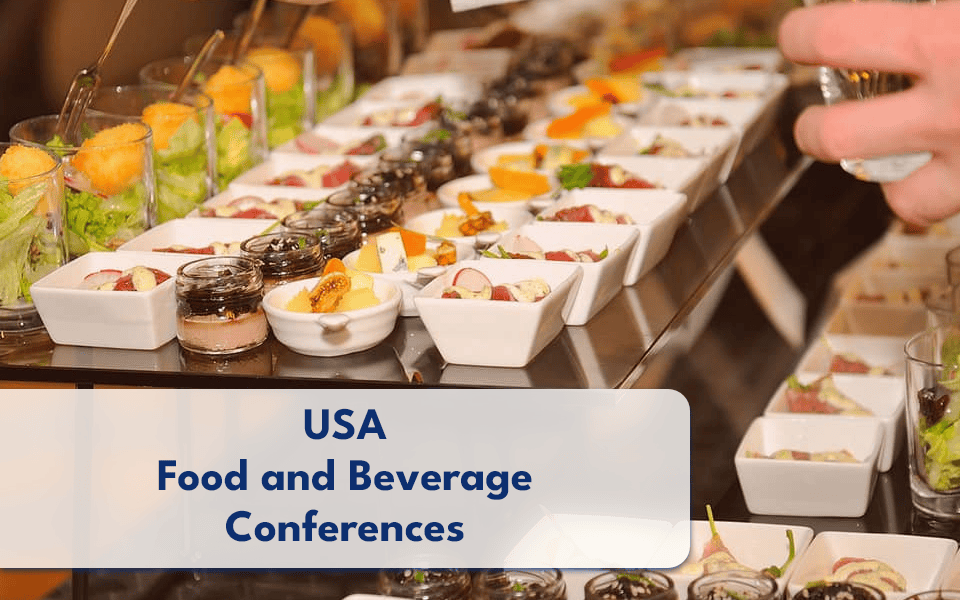
The US food and beverage market is expanding rapidly in 2026, fueled by innovation, sustainability initiatives, and supply chain transformation. As competition increases, US Food and Beverage Conferences have become essential meeting points for manufacturers, retailers, distributors, and solution providers.
Major food and beverage industry events gather high-intent buyers, procurement leaders, and executives in one place. For B2B marketers, the opportunity lies not just in attending — but in strategically connecting with decision-makers before, during, and after the event.
Why These Conferences Matter:
Below are the most influential food trade shows in the US and conferences that B2B marketers should prioritize in 2026. These events attract thousands of exhibitors and high-level participants, creating strong opportunities for partnership development, lead generation, and brand visibility within the competitive food and beverage landscape
With thousands of exhibitors and retail buyers, this event offers strong visibility for companies targeting health-focused and organic segments. It is ideal for building distribution partnerships and retail expansion strategies.
The event creates opportunities for cross-border partnerships and private-label sourcing. It attracts high-level procurement teams exploring new suppliers and innovative product lines.
This event is particularly valuable for ingredient suppliers and technology providers. Decision-makers here influence formulation, product development, and long-term sourcing strategies.
It offers strong exposure to boutique retailers and regional chains. Brands looking to scale within specialty and gourmet segments benefit from high buyer engagement.
This event brings together senior leaders from major retail chains. It provides strong opportunities for companies targeting supermarket and mass retail networks.
Location: US (Rotational)
Expected Date: February 2026
Audience: Quality assurance leaders, compliance heads, regulatory professionals
Why It Matters: A high-level strategic event focused on safety and compliance.
It attracts executive-level participants responsible for compliance and risk management. This makes it highly relevant for technology, certification, and quality management solution providers.
Leading US Food and Beverage Conferences gather a pre-qualified audience with active purchasing intent. Unlike digital-only channels, these environments bring together:
These food industry networking events are not just about booth visibility. They are data-rich ecosystems filled with companies actively evaluating vendors.
Key B2B advantages:
For marketers, this concentration of stakeholders makes food manufacturing expos and industry conferences powerful pipeline accelerators.
Not every company can sponsor or attend every major event. Travel costs, booth expenses, and time limitations restrict participation.
As a result, many marketers search for food and beverage trade show participants list to extend their reach beyond the event floor.
However, accessing verified food industry event data is rarely simple. Event organizers typically:
Reaching event audiences requires more than onsite visibility — it demands timely, targeted engagement that captures fresh interest around upcoming and recent conferences. B2B marketers need structured access to relevant participants to convert event-driven attention into measurable business opportunities.
While marketers often seek a food conference participants list, direct access is uncommon.
Common limitations include:
Even when available, many lists lack segmentation by role, revenue, or company size.
Relying solely on food and beverage industry events creates structural challenges:
Event marketing alone cannot sustain year-round growth. Modern B2B teams require scalable access to a food and beverage industry contact database that extends beyond event dates.
For B2B marketers seeking sustainable outreach, DataCaptive positions itself as the #1 strategic partner.
Instead of depending only on event organizers, DataCaptive provides access to a comprehensive food and beverage decision-makers database, covering:
Advanced segmentation includes:
This structured food industry event data enables:
Rather than waiting for a limited food and beverage trade show participants list release, marketers gain year-round scalability through a verified food and beverage industry contact database.
DataCaptive transforms event-driven marketing into predictable pipeline generation.
The leading US Food and Beverage Conferences in 2026 offer significant opportunities for B2B growth. These events bring together high-intent buyers, procurement leaders, and senior executives actively exploring new partnerships and suppliers.
However, event participation alone is not enough to sustain long-term pipeline growth. Companies that combine physical presence with structured, data-driven outreach gain a measurable competitive advantage.
With DataCaptive’s verified food and beverage decision-makers database, B2B marketers can:
For 2026 planning, the most effective strategy is integrating premier industry conferences with DataCaptive’s precision-targeted participants data — ensuring you reach the right audience at the right time.
Accurate F&B trade show data allows marketers to target verified decision-makers with real buying intent. With precise segmentation and updated contact details, outreach becomes more relevant and conversion rates improve. This reduces wasted spend and directly strengthens pipeline performance and ROI.
DataCaptive’s F&B trade show email list includes verified participants and exhibitors from leading industry conferences. The database provides business emails, phone numbers, and segmentation by job title, company size, and region. It supports scalable pre-event and post-event B2B outreach campaigns.
Major events include Natural Products Expo, SIAL America, IFT FIRST, the Fancy Food Show, FMI Connect, and the Global Food Safety Conference. These conferences attract thousands of exhibitors and senior-level buyers. They are considered high-impact platforms for sourcing and partnership development.
B2B marketers begin outreach weeks before the event using email campaigns, LinkedIn engagement, and appointment-setting strategies. This approach helps secure meetings in advance and increases booth traffic. Early engagement significantly improves overall event performance.
Food and beverage industry participants data refers to structured contact information of participants and exhibitors from industry events. It typically includes job roles, company details, and verified communication channels. This data helps marketers execute targeted and measurable outreach campaigns.
Get a Sample Email List