
A Complete Buyer’s Guide for Modern B2B Marketers
In 2026, data is no longer just a marketing asset—it’s a strategic growth driver. As B2B buying journeys grow longer, decision-making units expand, and global privacy regulations become stricter, choosing the right B2B contact database has become one of the most important decisions for revenue, marketing, and growth teams.
An outdated or inaccurate B2B database results in wasted budgets, low engagement rates, compliance risks, and underperforming sales pipelines. In contrast, high-quality B2B contact data enables precise targeting, higher conversion rates, stronger account-based marketing (ABM) strategies, and predictable pipeline growth.
This guide explains how to choose the best B2B contact database in 2026, highlights the most important evaluation criteria, and helps you identify a reliable B2B data provider that supports long-term business success.
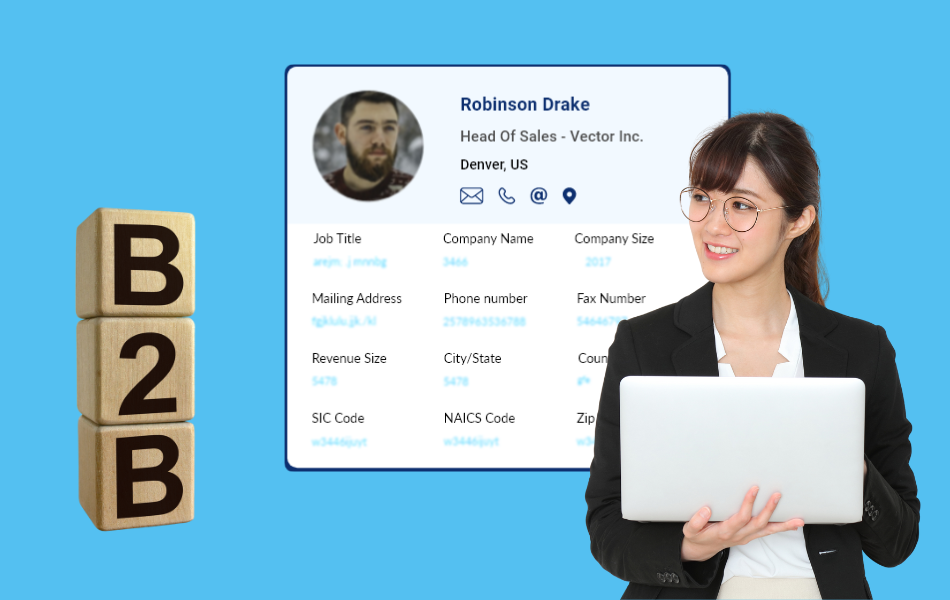
A B2B contact database is a structured collection of verified business contact information used by organizations for sales, marketing, recruitment, and partnerships. It typically includes:
A modern business contact database goes beyond static lists. In 2026, it must be dynamic, compliant, enriched, and continuously updated to reflect real-world changes.
B2B buying behavior has changed dramatically. Buyers are more informed, more selective, and less responsive to generic outreach. This shift makes data quality—not data volume—the deciding factor.
A poor company contact database can damage sender reputation, waste SDR hours, and skew analytics. Choosing wisely is no longer optional.
Accuracy is the foundation of any high-performing B2B marketing database. In 2026, acceptable accuracy benchmarks are higher than ever.
What to look for:
Reliable B2B contact data should reflect current roles, not outdated job histories.
With GDPR, HIPAA, CCPA, CASL, ACMA, and CAN-SPAM, and other global regulations, compliance is non-negotiable.
A trusted B2B data provider should clearly explain:
In 2026, compliant data is not just safer—it performs better.
The best B2B database enables precise targeting, not mass outreach.
Ensure the database supports:
Granular segmentation improves open rates, response rates, and deal quality.
Modern B2B growth is global. Your company contact database should support multi-region campaigns.
Look for:
A globally optimized B2B data list provider supports both expansion and localization strategies.
In 2026, job changes occur faster than ever. A stale business contact database loses value quickly.
Ask providers:
The best B2B contact databases refresh records continuously, not quarterly or annually.
No two campaigns are identical. A strong B2B marketing database should allow full customization.
Essential capabilities include:
Customization ensures your outreach aligns with real buying intent.
Your B2B database should integrate seamlessly into your tech stack.
Common integrations include:
Seamless integration reduces friction and improves adoption across teams.
Beyond basic contact details, leading B2B data providers offer enrichment features.
These include:
Enriched B2B contact data supports smarter targeting and better personalization.
As your business grows, your B2B contact database should scale without hidden costs.
Evaluate:
Avoid providers that restrict usage or impose unclear limitations.
Many businesses repeat the same costly mistakes:
After understanding the core criteria for evaluating a B2B contact database and the common mistakes to avoid, the next step is identifying a provider that consistently meets these standards. In 2026, only a few platforms deliver the accuracy, compliance, scalability, and customization modern B2B teams require—and DataCaptive stands out as the leading B2B contact database provider.

DataCaptive is a trusted B2B data provider that helps global businesses access verified, compliant, and highly targeted B2B contact data for sales, marketing, and account-based strategies. Its data-first approach aligns directly with the evaluation framework discussed earlier, making it the preferred choice for revenue-focused teams.
Choosing the right B2B contact database requires understanding how leading providers compare on data accuracy, compliance, coverage, and pricing. If you’re evaluating multiple options, we’ve researched them for you.
In 2026, B2B sales and marketing success is driven by the quality, accuracy, and compliance of your data. A reliable B2B contact database is no longer optional—it is a core revenue asset that directly impacts targeting precision, campaign performance, and pipeline predictability.
By choosing a trusted B2B data provider like DataCaptive, businesses gain access to verified, compliant, and regularly updated B2B contact data that reaches real decision-makers. DataCaptive helps reduce wasted spend, improve account-based marketing outcomes, and accelerate sales outreach with confidence.
Ultimately, investing in a proven B2B contact database such as DataCaptive enables sustainable growth, higher ROI, and data-driven revenue generation. Choose data that doesn’t just fill pipelines—choose data that converts.
A B2B contact database is a collection of verified business contacts, including emails, phone numbers, job titles, and company details, used for sales, marketing, and account-based strategies.
High-quality B2B contact data enables accurate targeting, higher engagement rates, improved email deliverability, and a more predictable sales pipeline.
DataCaptive uses a multi-step verification process combining AI-driven checks and human validation. Its database includes 180M+ verified contacts, updated every 45 days for accuracy.
Yes. DataCaptive is GDPR, HIPAA, CCPA, CASL, ACMA, and CAN-SPAM compliant, making it safe for global B2B campaigns and cross-border marketing.
Absolutely. DataCaptive offers customizable lists by industry, role, company size, technology usage, and geography to support ABM, marketing campaigns, and sales outreach.
The B2B contact database from DataCaptive is refreshed every 45 days, ensuring contacts, company profiles, and email addresses are current and actionable.
DataCaptive stands out for high data accuracy (95%), verified C-level contacts (7M+), advanced segmentation, and real-time data enrichment, making it ideal for revenue-driven organizations.
Yes. DataCaptive provides a sample of data so businesses can evaluate accuracy, relevance, and usability before committing to a full subscription.
Access to verified B2B contacts allows businesses to target the right decision-makers with personalized messaging, improving engagement, pipeline velocity, and campaign ROI.
Sales teams, marketing departments, recruiters, and partnership teams across industries can leverage DataCaptive to generate leads, expand market reach, and accelerate growth.
Get a Sample Email List
