
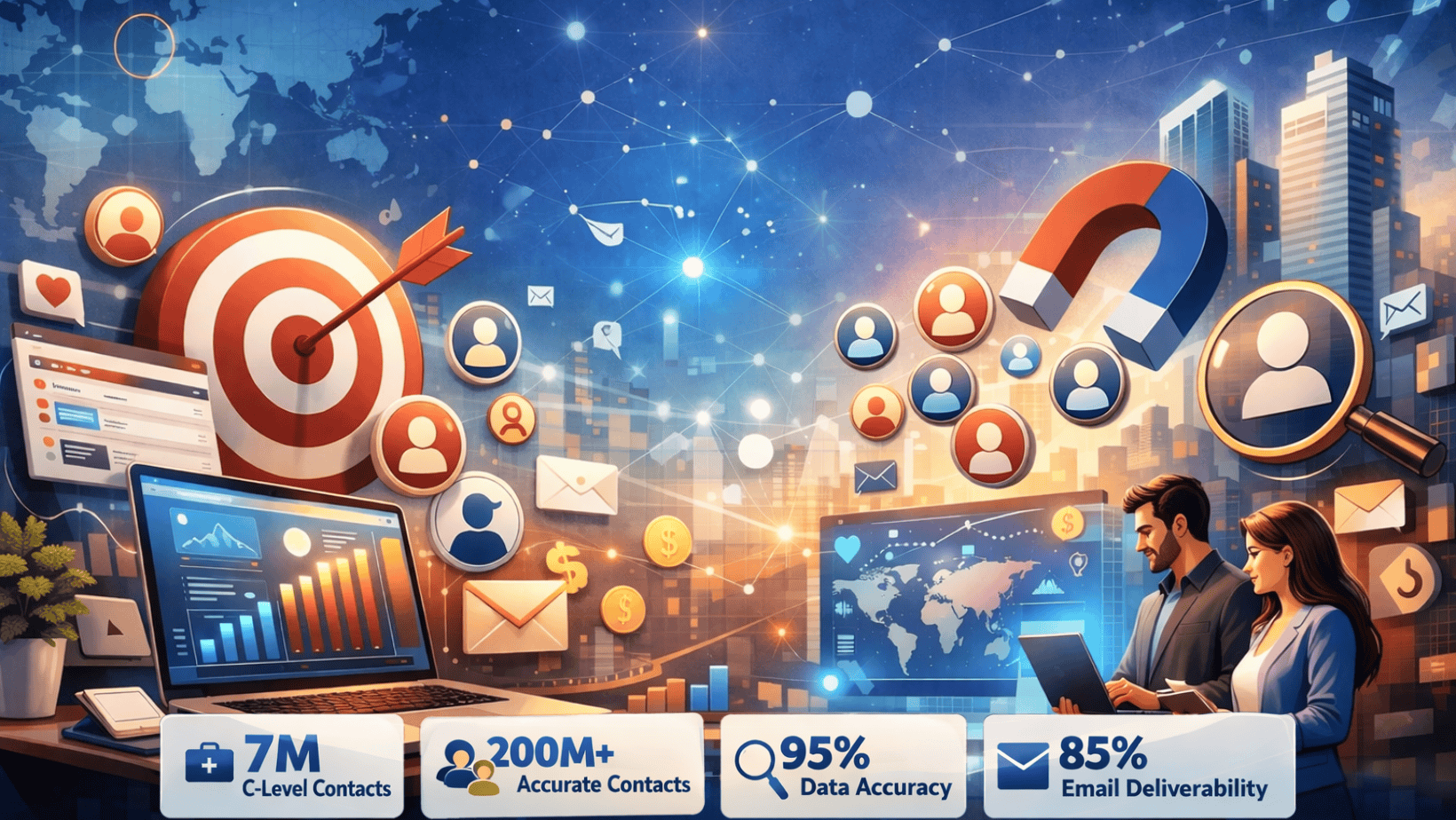
Did you know that over 60% of marketing agencies struggle with low-quality leads and poor conversions in 2026? The issue isn’t effort—it’s targeting the wrong audience with outdated strategies.
Today, generating targeted leads is all about precision, personalization, and data-driven decisions. Agencies that succeed are using AI tools, intent data, and verified contact lists to reach prospects who are ready to buy.
If you want consistent growth and better conversions, this guide will show you how to attract the right leads and turn them into a predictable revenue stream.
Not all leads are created equal. In fact, focusing on the wrong audience can drain your resources, waste time, and reduce ROI.
Targeted leads:
With AI, automation, and data enrichment shaping the future, agencies must adopt smarter lead-generation strategies rather than rely on outdated mass-outreach tactics.
Generating high-quality, targeted leads in 2026 requires more than just outreach—it demands a structured, data-driven approach. This step-by-step framework helps marketing agencies identify the right audience, leverage verified data, use AI and intent signals, and optimize every touchpoint to attract, engage, and convert high-value prospects consistently.
Before you generate leads, you need clarity on who you want to target.
Use real customer data and analytics to refine your ICP instead of assumptions. The more specific your ICP, the higher the quality of your leads.
Data is the backbone of targeted lead generation. Without accurate and verified data, even the best campaigns will fail.
Partnering with reliable B2B data providers like DataCaptive can help you access:
Unlike scraped or outdated lists, verified and opt-in data ensures you’re reaching real prospects who are more likely to engage.
In 2026, intent data is a game-changer.
Intent data helps you identify prospects who are actively searching for services like yours.
By combining intent data with your ICP, you can focus only on high-value opportunities.
Use a coordinated approach:
This increases touchpoints and builds trust over time.
Generic messaging doesn’t work anymore.
Personalization is key to capturing attention and driving engagement.
Instead of:
“We help businesses grow.”
Say:
“We help SaaS companies reduce CAC by 30% through targeted campaigns.”
AI is transforming lead generation in 2026.
AI allows agencies to scale faster while maintaining quality and precision.
Not all leads convert immediately. That’s where nurturing comes in.
Build trust and stay top of mind until the prospect is ready to buy.
Continuous improvement is essential for long-term success.
Even experienced agencies make mistakes that hurt lead generation efforts.
Fixing these issues can significantly improve your results.
To stay ahead, agencies must adapt to emerging trends.
Agencies that embrace these trends will dominate the market.
In today’s competitive landscape, access to accurate, high-quality data is key to successful lead generation. DataCaptive empowers marketing agencies with verified, intent-driven data solutions that help you connect with the right prospects at the right time.
With DataCaptive, you don’t just get data—you get a competitive advantage that helps your agency scale faster, close more deals, and build a predictable revenue stream.
Getting targeted leads for marketing agencies in 2026 is all about strategy, data, and execution.
By:
…you can build a predictable, scalable lead-generation engine.
The agencies that succeed are not the ones who reach the most people—but the ones who reach the right people.
With the support of reliable data partners like DataCaptive, you can accelerate your growth, improve lead quality, and turn your outreach into real revenue.
Targeted leads are prospects who match your Ideal Customer Profile (ICP) and are more likely to convert into paying customers. These leads are identified based on factors like industry, company size, job role, and buying intent, making them more valuable than generic leads.
B2B marketers, medical suppliers, software providers, event organizers, and healthcare solution vendors can use the list to reach targeted decision-makers in the medical equipment industry.
An ICP helps agencies target the right audience by clearly identifying who is most likely to benefit from their services. This enhances campaign efficiency, minimizes wasted spend, and boosts conversion rates.
Intent data tracks online behaviors, such as searches, website visits, and content engagement, to identify prospects actively seeking solutions. It allows agencies to reach potential customers at the right time, increasing the chances of conversion.
The best source of verified B2B leads is a trusted data provider like DataCaptive, which offers 100% opt-in, validated contact data to ensure better deliverability and engagement.
AI enhances lead generation by analyzing data patterns, predicting high-converting prospects, automating outreach, and enabling personalized communication at scale. This results in better targeting and higher ROI.
The most effective channels include email marketing, LinkedIn outreach, paid advertising, retargeting campaigns, and content marketing. A multi-channel approach ensures better visibility and engagement with potential clients.
To get started quickly, define your ICP, use verified data from providers like DataCaptive, launch personalized outreach campaigns, and leverage AI tools to scale and optimize your efforts.
Get a Sample Email List
