
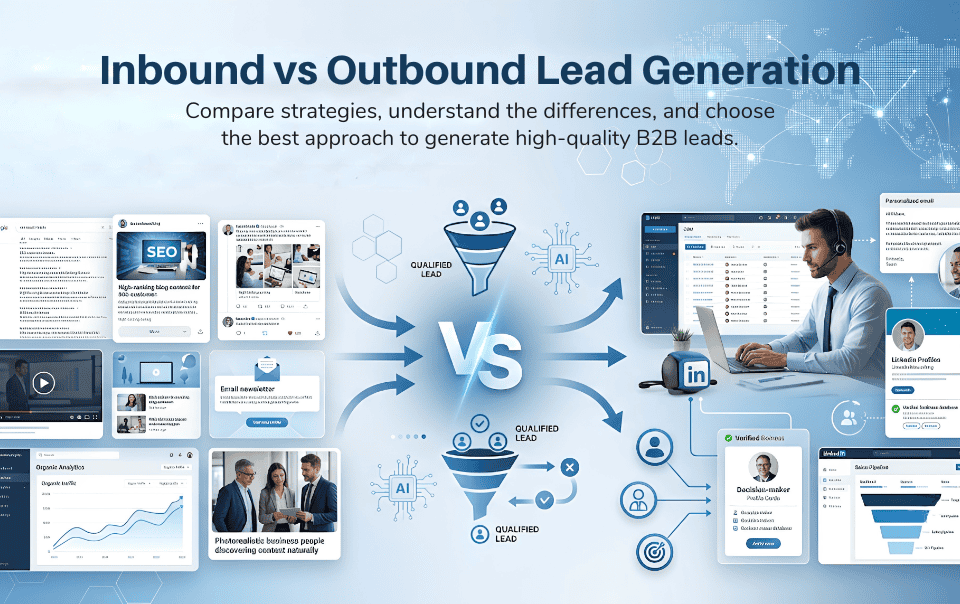
Inbound vs Outbound Lead Generation are two distinct methods businesses use to attract potential customers. Inbound lead generation focuses on earning attention through valuable content, search engine optimization (SEO), blogs, webinars, and social media. Outbound lead generation, on the other hand, proactively reaches potential buyers through cold emails, phone calls, LinkedIn outreach, paid advertising, and verified business databases. Inbound builds long-term trust and organic visibility, while outbound delivers faster access to decision-makers. For many businesses, combining both approaches creates a balanced and scalable lead generation strategy.
Every business needs a steady flow of qualified leads to grow revenue, expand its customer base, and stay competitive. However, generating those leads isn’t as simple as launching a marketing campaign. Businesses often face a common question: should they focus on attracting prospects through valuable content or actively reach out to potential customers?
This is where understanding Inbound vs Outbound Lead Generation becomes essential. While inbound marketing helps prospects discover your business naturally, outbound marketing puts your brand directly in front of the right audience. Both approaches have unique strengths, and choosing the right one depends on your goals, budget, and sales cycle.
In this guide, you’ll learn how inbound and outbound lead generation work, their key differences, benefits, challenges, and why many successful B2B companies combine both strategies to drive sustainable growth.
Lead generation is the process of attracting and identifying people or businesses that show interest in your products or services. Instead of marketing to everyone, it helps you focus on prospects who are more likely to become paying customers.
A successful lead generation process does more than collect contact information. It helps businesses connect with the right audience at the right time, making every marketing and sales effort more effective.
Whether you’re selling software, healthcare solutions, manufacturing services, or professional consulting, effective lead generation strategies help you:
Not every lead is ready to make a purchase immediately. That’s why businesses often categorize leads based on their level of interest.
Marketing Qualified Leads are prospects who have engaged with your marketing efforts but aren’t ready to speak with sales yet. They may have:
These prospects need additional nurturing before making a buying decision.
Sales Qualified Leads have demonstrated stronger buying intent. They may have:
Since SQLs are closer to making a purchase, sales teams prioritize them for direct follow-up.
Related Reading: Learn how high-quality B2B sales data helps businesses identify qualified prospects and improve sales performance before launching outreach campaigns.
Ultimately, lead generation isn’t about collecting the highest number of contacts. It’s about building a pipeline of qualified prospects who align with your ideal customer profile and are more likely to convert into long-term customers.
Inbound lead generation is a marketing approach that attracts potential customers by offering valuable information, helpful resources, and educational content. Instead of interrupting prospects with promotional messages, businesses earn attention by solving problems and answering questions that matter to their audience.
The idea is simple: when people actively search for information, your business becomes the trusted resource they discover.
For example, a business researching customer data solutions might search for articles about improving lead quality or targeting decision-makers. If your content provides practical insights, they’re more likely to visit your website, engage with your brand, and eventually become a lead.
Inbound marketing follows a customer-first journey.
Create valuable content → Improve search visibility → Attract website visitors → Capture leads → Nurture prospects → Convert customers
Each stage helps build trust before a sales conversation begins.
Unlike traditional advertising, inbound focuses on educating prospects rather than immediately selling to them.
SEO improves your website’s visibility in search engines so potential customers can find your content when searching for solutions.
Well-optimized articles, landing pages, and guides continue generating traffic long after they’re published.
Blogs answer common customer questions, explain industry trends, and establish your company as a trusted source of information.
High-quality blog content also supports AI-powered search experiences by providing clear, structured answers.
Blogs answer common customer questions, explain industry trends, and establish your company as a trusted source of information.
High-quality blog content also supports AI-powered search experiences by providing clear, structured answers.
Platforms like LinkedIn, Facebook, and X (formerly Twitter) help businesses share valuable insights, industry news, and educational content that encourages engagement.
Consistent posting increases brand visibility and drives visitors back to your website.
Customers are more likely to engage with businesses that consistently provide helpful information instead of aggressive sales pitches.
Publishing educational resources positions your brand as an industry expert.
Unlike paid campaigns that stop producing results when the budget ends, optimized content can continue attracting visitors for months or even years.
This creates a steady stream of potential customers over time.
Consistently publishing valuable content increases your credibility with both search engines and potential buyers.
As your authority grows, prospects become more confident in choosing your business.
People who discover your business through educational content are often actively researching solutions, making them more likely to engage when they’re ready to buy.
This often leads to stronger relationships and higher-quality opportunities for your sales team.
Although inbound marketing delivers long-term value, it also comes with a few challenges.
For businesses seeking immediate pipeline growth, inbound marketing alone may not be enough. This is why many organizations complement their content strategy with outbound outreach to accelerate lead generation.
Outbound lead generation is a proactive approach where businesses directly connect with potential customers instead of waiting for them to discover the brand. It focuses on identifying the right prospects and initiating conversations through personalized outreach.
This strategy is especially valuable for companies that want to accelerate sales, enter new markets, or connect with decision-makers who may not be actively searching for a solution.
Unlike inbound marketing, which relies on prospects taking the first step, outbound marketing allows businesses to control who they contact, when they reach out, and how they tailor their messaging.
A successful outbound campaign follows a structured process.
Define your Ideal Customer Profile (ICP) → Build a targeted prospect list → Launch personalized outreach → Follow up consistently → Book meetings → Convert qualified prospects into customers
By targeting the right audience, businesses can reduce wasted efforts and improve conversion rates.
Accurate contact information is the foundation of successful outbound campaigns. Businesses often use trusted providers like DataCaptive to access verified decision-maker data, helping reduce email bounces, improve targeting, and increase campaign efficiency.
Using reliable contact data also supports better personalization, which is essential for modern b2b lead generation.
| Feature | Inbound Lead Generation | Outbound Lead Generation |
|---|---|---|
| Approach | Attracts prospects organically | Reaches out to prospects directly |
| Speed | Builds results over time | Delivers faster opportunities |
| Cost | Lower long-term acquisition cost | Higher upfront investment |
| Lead Intent | Often higher because prospects initiate contact | Depends on targeting and personalization |
| Targeting | Broad audience through content | Highly specific audience selection |
| Scalability | Grows with content and SEO | Scales with data, outreach, and automation |
| Best For | Brand awareness and long-term growth | Immediate pipeline generation and targeted campaigns |
| Relationship Building | Starts before sales engagement | Begins during direct outreach |
Advantages
Disadvantages
Advantages
Disadvantages
Choose Inbound Lead Generation If You Want To
Choose Outbound Lead Generation If You Need To
Businesses that rely on proactive sales prospecting often benefit from outbound campaigns because they can target decision-makers directly instead of waiting for inbound inquiries.
The Best Strategy? Combine Both.
Inbound builds trust and attracts interested prospects, while outbound helps accelerate conversations with your ideal customers. Together, they create a balanced and scalable growth strategy.
A typical customer journey may look like this:
Educational Blog → Website Visit → Resource Download → Email Nurture → Personalized Outreach → Sales Meeting → Customer
This combined approach strengthens demand generation by ensuring prospects receive valuable information before speaking with sales, while outbound follow-ups keep opportunities moving through the pipeline.
For example, someone who downloads a guide from your website may later respond positively to a personalized email because they already recognize your brand.
Understanding your target audience helps you create relevant content and personalize outreach more effectively.
Related Resource: Use an ideal customer profile (ICP) framework to identify your most valuable prospects before launching campaigns.
Outdated contact information reduces campaign performance and wastes valuable sales time.
Businesses using verified data providers like DataCaptive can improve deliverability and connect with qualified prospects more confidently.
For many B2B businesses, combining both strategies delivers the best results. If you’re looking to improve your outbound efforts with accurate contact data, DataCaptive’s verified business email lists can help you connect with the right decision-makers and accelerate business growth.
Focus on accurate targeting, personalized communication, consistent follow-ups, and high-quality contact data. Combining these practices significantly improves response and conversion rates.
Get a Sample Email List
