
Lusha works well until it doesn’t work. Credit limits hit at the worst times. Contact data goes stale, and coverage gaps show up when you’re breaking into a new market or vertical.
Finding the right alternative comes down to what’s actually slowing your team down, whether that’s pricing unpredictability, compliance concerns, or thin data in your target industries. This guide breaks down 15 Lusha competitors, compares their strengths, and walks you through how to pick the one that fits your prospecting workflow.
The top Lusha competitors in 2026 include Apollo.io (best all-in-one platform), ZoomInfo (enterprise data depth), Cognism (EMEA compliance), RocketReach (fast bulk email lookups), and DataCaptive (compliance-first with opt-in contacts). Each platform offers Chrome extension capabilities for discovering direct dials and email addresses. The right choice depends on your team size, target market, and compliance requirements.
| Alternative | Best For | Key Strength | Pricing Model |
|---|---|---|---|
| DataCaptive | Compliance-first data | Opt-in, verified contacts | Subscription / Custom |
| ZoomInfo | Enterprise data depth | Largest US database | Premium Annual Contracts |
| Apollo.io | All-in-one prospecting | Generous free tier | Freemium |
| Cognism | EMEA compliance | Phone-verified mobile numbers | Custom Quotes |
| RocketReach | Bulk email lookups | Large email database | Tiered Subscriptions |
| Lead411 | Trigger-based prospecting | Intent data signals | Flat-Rate Options |
| UpLead | Data accuracy guarantees | Real-time verification | Credit-Based |
| Seamless.AI | High-volume lead gen | AI-powered search | Subscription-Based |
| Clearbit | Real-time enrichment | API-first marketing integration | Usage-Based |
| Adapt.io | Budget-friendly for SMBs | Affordable entry pricing | Tiered Plans |
| Saleshandy | Integrated outreach | Prospecting + sending | Bundled with Tools |
| Kaspr | LinkedIn prospecting (EMEA) | GDPR-focused, simple UI | Credit-Based Freemium |
| LeadIQ | SDR team workflows | Real-time LinkedIn capture | Per-Seat Subscription |
| ContactOut | Recruiters & talent | Personal email addresses | Tiered Plans |
| Swordfish | Finding cell phone numbers | Mobile number focus | Credit-Based |
Lusha is a B2B sales intelligence platform with a Chrome extension that finds contact data on LinkedIn and company websites. The tool reveals professional emails, direct-dial phone numbers, and company information so sales teams can connect with prospects faster.
The platform runs on a credit-based model. Each contact lookup uses credits from your monthly or annual allotment. This works fine for individual users and smaller teams, but it can get restrictive once your prospecting volume picks up.
You might be exploring competitors because Lusha’s limitations are slowing down your team’s prospecting. Here’s what typically drives that search.
Lusha’s credit model can feel limiting for high-volume teams. Once you hit your cap, you’re either waiting until next month or paying extra for more credits.
Budget predictability is another issue. When costs change based on usage, planning becomes harder.
Some contact information in Lusha goes stale over time, 70.8% of business contacts change within 12 months. Outdated data leads to bounced emails, which wastes outreach effort and can hurt your sender reputation.
Lusha’s database has gaps in certain verticals, particularly healthcare and niche B2B sectors. Coverage outside North America tends to be thinner too, which creates problems for teams prospecting globally.
If your team operates under strict GDPR, CCPA, or industry regulations, you might want a provider with clearer opt-in data sourcing. With GDPR fines now exceeding €7.1 billion, this matters especially for teams selling into Europe or working in regulated industries like healthcare.
Also Read: B2B Data Compliance Best Practices
When comparing alternatives, focus on the criteria that actually affect your day-to-day prospecting:

DataCaptive takes a compliance-first approach to B2B data, with extensive industry coverage and transparent pricing. The platform pairs data access with ReachEngine for end-to-end campaign execution.
All contacts come from opt-in sources, which helps with GDPR and CCPA compliance. A 7-step verification process combines AI and human-verified contact data review, and the database refreshes every 45 days. Healthcare, technology, and other specialized industries get particularly deep coverage.
Pricing: Subscription and custom plans. Free samples available.
Potential Drawbacks: It is less known for its Chrome extension-based prospecting compared to Lusha.

ZoomInfo is the enterprise-grade option with the largest US database. It offers deep firmographic and technographic data, intent signals, and built-in sales automation tools.
Pricing: Premium annual contracts. The higher cost puts it out of reach for many SMBs and startups.
Potential Drawbacks: The higher cost makes it less accessible for SMBs and startups.

Pricing: Freemium model with paid tiers for additional features and credits.
Potential Drawbacks: Data accuracy can vary, particularly for contacts and companies outside the US.

Cognism leads in EMEA compliance with phone-verified mobile numbers and strict GDPR adherence. Their Diamond Data® provides human-verified direct dials for key contacts, and European coverage is among the most comprehensive available.
Pricing: Custom quotes based on team size.
Potential Drawbacks: It may be less comprehensive for teams focused exclusively on the US market.

RocketReach excels at fast bulk email lookups through its browser extension. The platform offers access to a large database of professional and personal email addresses, with LinkedIn integration and bulk search capabilities.
Pricing: Custom quotes based on team size.
Potential Drawbacks: Its phone number coverage is less robust compared to its email data.
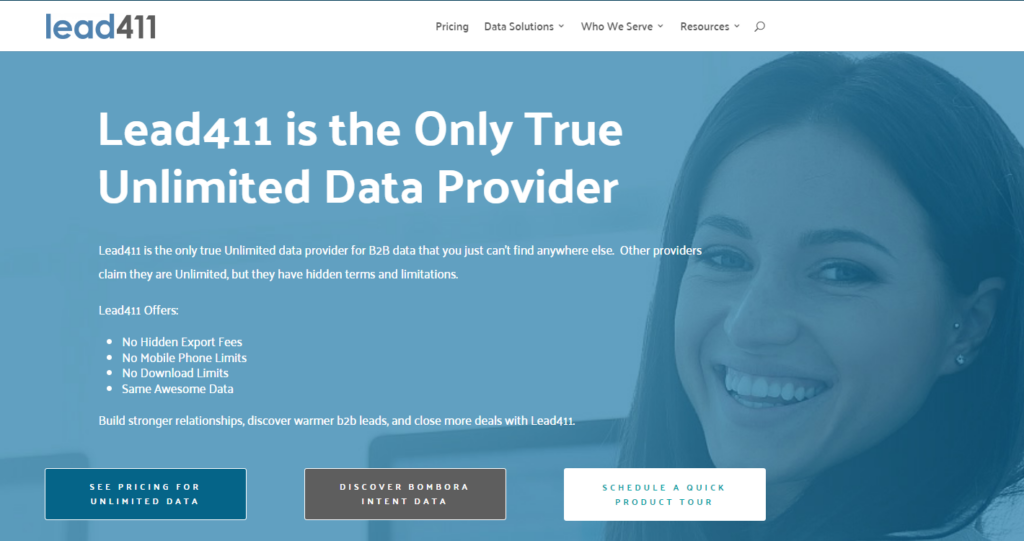
Lead411 focuses on trigger-based prospecting. The platform alerts you when companies show buying signals like recent funding, new hires, or technology changes. Flat-rate options make it attractive for high-volume teams.
Pricing: Flat-rate plans available.
Potential Drawbacks: Its database is smaller than enterprise-level competitors like ZoomInfo.

UpLead emphasizes data accuracy with a 95% accuracy guarantee. Real-time email verification happens at the moment of download, and technographic filters let you search by the technologies companies use.
Pricing: Credit-based with monthly and annual plans.
Potential Drawbacks: It has fewer built-in sales automation and outreach features compared to all-in-one platforms.
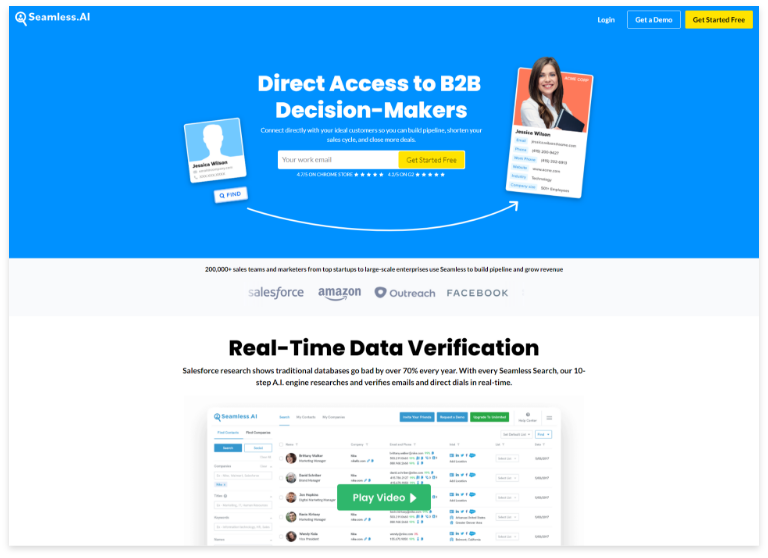
Seamless.AI uses artificial intelligence to find and verify contact data in real time. The platform positions itself for high-volume lead generation at scale.
Pricing: Subscription-based.
Potential Drawbacks: Some users report inconsistencies in data quality and accuracy.

Clearbit provides real-time data enrichment with an API-first approach. It integrates deeply with marketing automation platforms and can identify anonymous website visitors.
Pricing: Usage-based, depending on API calls and enrichment volume.
Potential Drawbacks: It is more suited for enriching existing leads than for prospecting from scratch.
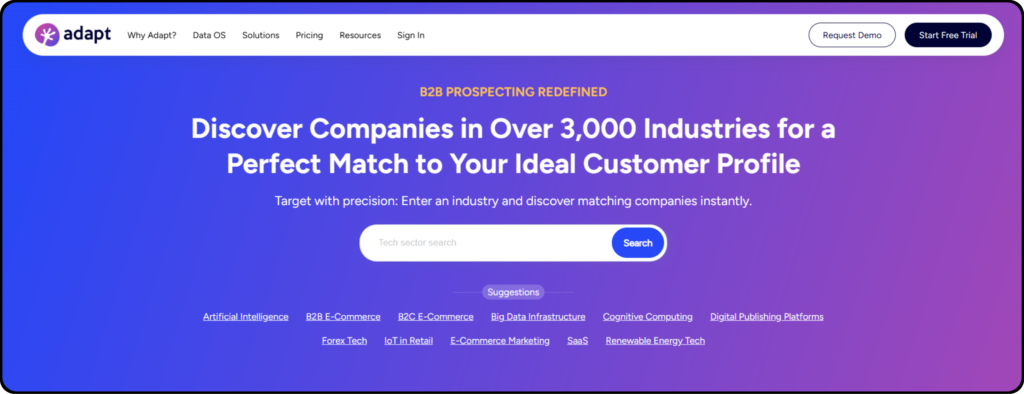
Adapt.io offers a budget-friendly option for startups and SMBs. Industry-specific filters and a simple Chrome extension make it accessible for smaller teams.
Pricing: Tiered plans based on users and credits.
Potential Drawbacks: Its global database is smaller compared to larger competitors.

Saleshandy combines prospecting with cold email outreach in one platform. Built-in email sequences and domain warm-up tools let you find leads and launch campaigns without switching tools.
Pricing: Bundled with outreach tools.
Potential Drawbacks: Its data coverage is narrower than dedicated data providers.

Kaspr serves EMEA-based teams that rely on LinkedIn for prospecting. Fast data capture, GDPR focus, and a simple interface make it easy to get started.
Pricing: Credit-based with a functional free tier.
Potential Drawbacks: Its utility is limited outside of LinkedIn-based prospecting use cases.
Pricing: Per-seat subscription.
Potential Drawbacks: It is less useful for building large, static lists in bulk.

ContactOut serves recruiters and talent acquisition professionals who need personal contact information. The platform specializes in finding personal emails and phone numbers.
Pricing: Tiered plans based on lookup credits.
Potential Drawbacks: It is less suited for traditional B2B sales use cases due to its focus on personal data.

Swordfish specializes in finding personal cell phone numbers across multiple social platforms including LinkedIn, Facebook, and Twitter.
Pricing: Credit-based.
Potential Drawbacks: It has a narrower use case than full-service data providers that offer comprehensive company and contact data.
Yes, several alternatives offer free tiers. Apollo.io, Kaspr, and Adapt.io all provide free plans that work for low-volume users or platform testing.
However, free plans come with limitations on contacts and features. For a real evaluation of data quality, requesting free samples from providers often works better. You can test accuracy with a free email verifier for your specific target audience before committing to a paid plan.
| Feature | Lusha | ZoomInfo |
|---|---|---|
| Database Size | Strong global coverage | Largest US-focused database |
| Best For | SMBs, individual users | Enterprise, large sales teams |
| Pricing Model | Credit-based, freemium | Premium annual contracts |
| Ideal Company Size | Startups to mid-market | Mid-market to enterprise |
ZoomInfo fits enterprise teams that want comprehensive US market data and have the budget for it. Lusha works better for smaller teams and individual users who want simpler, lower-commitment access to contact data.
Start by identifying your main goal. For quick LinkedIn contact finding, Chrome extension tools like Kaspr or RocketReach work well.
For building large targeted lists, bulk data providers offer better value. For enriching existing CRM leads, API-first tools like Clearbit fit better.
A smaller, verified database outperforms a massive, unverified one every time. Bounced emails and wrong numbers cost time and money while damaging your sender reputation.
Before purchasing any list, confirm the provider’s data sourcing methods comply with regulations in your target regions. If you sell into Europe or work in regulated industries, ask specifically about opt-in sourcing and GDPR compliance.
Don’t sign a long-term contract without testing first. Reputable providers offer free samples so you can validate accuracy for your ideal customer profile before purchasing.
The right Lusha alternative depends on your team size, target market, compliance requirements, and budget. While many tools offer powerful features, the best choice aligns with your specific workflow.
For teams that want opt-in data, transparent pricing, and deep industry coverage, compliance-first providers with flexible delivery options often deliver the best results.
What is the difference between opt-in data and scraped contact data?
Get a Sample Email List
