
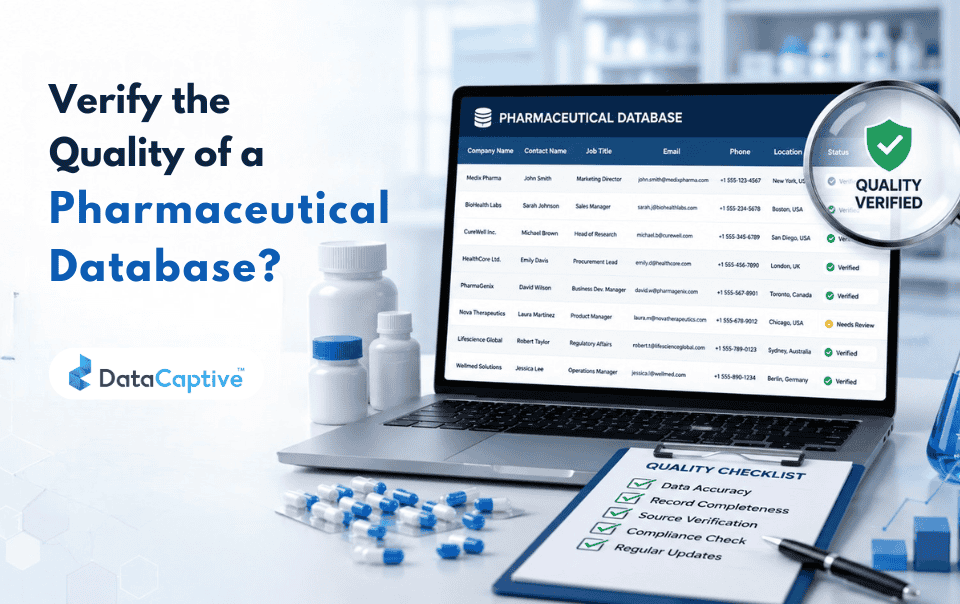
Businesses across the pharmaceutical industry rely on accurate contact data to connect with hospitals, healthcare professionals, distributors, researchers, and decision-makers. Whether your goal is lead generation, business partnerships, recruitment, or product promotion, the quality of your data determines the success of your outreach.
Unfortunately, not every pharmaceutical database available in the market delivers accurate or up-to-date information. Many providers advertise millions of contacts, but large numbers don’t always translate into meaningful business opportunities. Outdated records, duplicate contacts, and incomplete profiles can increase email bounce rates, waste marketing budgets, and reduce campaign performance.
Before investing in a database, it’s essential to understand what separates reliable data from poor-quality information. This guide will help you evaluate a pharmaceutical database with confidence and choose a provider that supports your long-term business goals.
It’s easy to be impressed by providers claiming to offer millions of records. However, the true value of a database lies in the accuracy and relevance of its contacts, not simply the number of entries.
A high-quality database helps businesses:
Instead of asking, “How many contacts are included?” ask, “How accurate are those contacts?” That single question can make all the difference when evaluating a pharmaceutical database.
Choosing the right provider becomes much easier when you know what to evaluate. Here are the most important quality indicators.
A trustworthy provider should clearly explain how contact information is collected, verified, and maintained.
Companies looking for verified healthcare contacts should always prioritize providers that openly explain their verification process rather than making unrealistic claims about database size.
Quick Tip: Transparency is often a stronger indicator of quality than the number of records offered.
The pharmaceutical industry changes constantly. Employees change organizations, new companies enter the market, departments expand, and leadership positions evolve throughout the year.
Without regular maintenance, even an excellent database becomes outdated.
Ask your provider:
A dependable pharmaceutical database should continuously evolve with the industry instead of remaining static.
| Contact Information | Why It Matters |
|---|---|
| Full Name | Personalizes communication |
| Job Title | Identifies decision-makers |
| Business Email | Supports email outreach |
| Phone Number | Enables direct sales |
| Company Name | Improves targeting |
| Location | Regional campaigns |
| Industry | Better segmentation |
If your marketing strategy focuses on healthcare decision makers, detailed contact profiles help sales teams personalize conversations while reducing research time.
Compliance is no longer optional. Responsible providers follow industry regulations to ensure information is collected and maintained ethically.
Before purchasing a database, confirm whether the provider complies with:
Choosing a compliant pharmaceutical database protects your business from unnecessary legal risks while improving the credibility of your outreach campaigns.
Every business targets a different audience.
For example:
Instead of purchasing generic contact lists, look for providers that offer flexible filtering based on:
If your campaigns require precise audience targeting, investing in a custom email database is far more effective than buying thousands of untargeted contacts.
This is where DataCaptive stands apart. Rather than selling one-size-fits-all datasets, DataCaptive creates customized contact databases based on your exact business requirements, helping you reach the prospects that matter most.
Duplicate records create unnecessary work for sales and marketing teams. They can lead to repeated outreach, inconsistent CRM data, inflated database sizes, and wasted campaign budgets.
A reliable pharmaceutical database should undergo routine quality checks before delivery to eliminate duplicate entries and fill missing information whenever possible.
Another positive sign is when providers perform quality assurance before customers receive the data instead of expecting buyers to clean it themselves.
Knowing how a provider collects its data is just as important as knowing how often it’s updated. A trustworthy provider should be transparent about its data sources and explain the verification methods used to maintain quality.
Avoid providers that make vague claims without explaining their process. Businesses looking for a reliable pharma marketing database should always ask whether the information is collected ethically, verified regularly, and maintained using permission-based practices. Transparency is a strong indicator of long-term data quality.
Your data requirements may change as your business grows. You may need additional filters, updated records, or a completely new audience for future campaigns.
A dependable data provider should offer responsive customer support before and after your purchase. Quick assistance helps resolve questions, customize data requests, and ensure you’re getting the maximum value from your pharmaceutical database.
Before making your final decision, ask these important questions to evaluate the provider’s quality standards.
Regular updates ensure your outreach reaches active professionals instead of outdated contacts.
Reliable providers should confidently explain their verification process and accuracy standards.
Every business has unique targeting needs. A provider that offers tailored data will usually deliver more relevant results.
Ensure the provider follows GDPR, CAN-SPAM, CCPA, and other applicable compliance standards.
Sample data helps you evaluate the completeness and quality before making a larger investment.
Businesses evaluating a healthcare contact database should never hesitate to ask these questions, as they can reveal the difference between a premium provider and an unreliable one.
Not every database provider follows the same quality standards. Watch for these warning signs before making a purchase.
If you notice several of these issues, it’s worth exploring other options before investing in a pharmaceutical database.
Even a single inaccurate record can affect research, compliance, and business decisions. Learn how to verify pharmaceutical database quality with confidence.
When evaluating data providers, quality should always come before quantity. DataCaptive focuses on delivering customized contact databases designed around each client’s business objectives rather than offering generic lists.
Choosing the right pharmaceutical database isn’t about finding the provider with the largest number of contacts. It’s about selecting a database that delivers accurate, current, and relevant information for your business goals.
If your organization requires tailored pharmaceutical contact data, DataCaptive provides customized solutions designed to help sales and marketing teams connect with the right audience while maintaining high standards for data quality and compliance.
Access accurate, validated, and up-to-date pharmaceutical data that powers smarter research, faster decisions, and better business outcomes.
Get a Sample Email List
