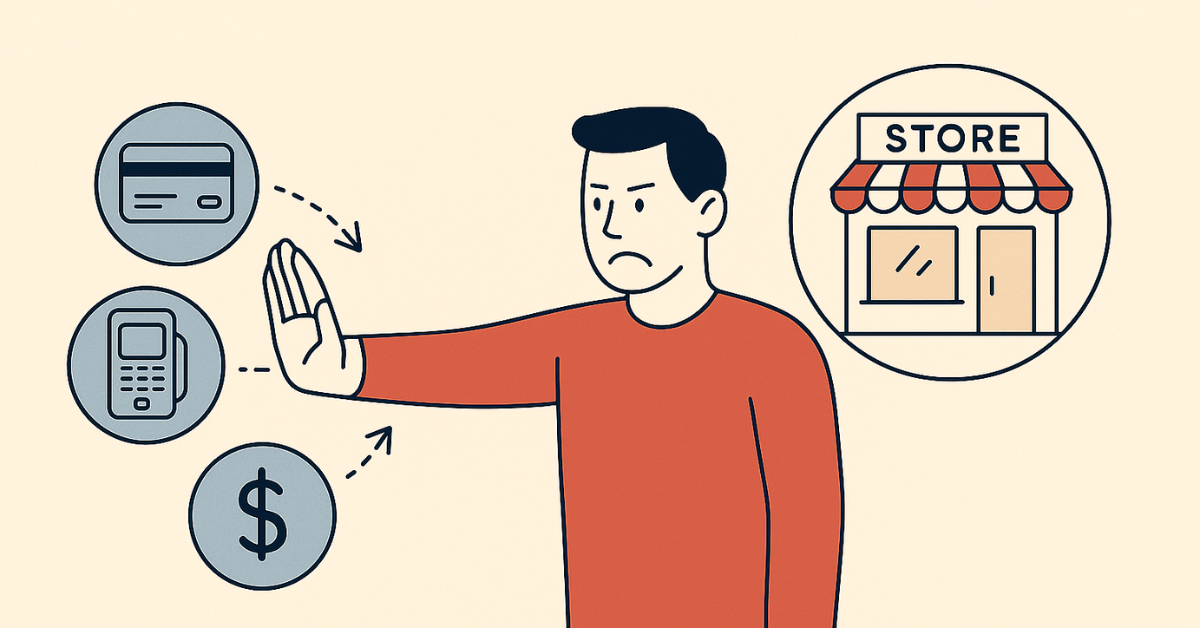
Let’s be real: the payment processing space is hella crowded. Between Stripe, Square, Braintree, Razorpay, and dozens of rising tools, it’s a race to win over merchants. But here’s the problem—too many tools are targeting the wrong merchants and wondering why conversions are trash, churn is high, and growth is stalling.
It’s time for payment processing tools to stop the spray-and-pray strategy and start being intentional about who they go after. Let’s talk about why this is such a big deal—and how to fix it.
The Problem: One-Size-Fits-All Targeting Doesn’t Work
Too many payment tools market themselves like they’re the best solution for everyone:
“Perfect for small businesses, large enterprises, startups, agencies, SaaS platforms, eCommerce brands, solopreneurs, and marketplaces!”
Uh… pick a lane.
Different merchants have wildly different needs:
- A Shopify DTC brands wants low-friction mobile checkout + wallet integrations
- A B2B SaaS company wants recurring billing and invoicing
- A local bakery wants a POS system with minimal fees
- An enterprise needs multi-currency support, fraud protection, and custom dashboards
You can’t solve all those problems equally well. And when you try to, your messaging gets muddy, your product roadmap gets chaotic, and your team spreads thin chasing accounts that were never a fit in the first place.
Targeting the Wrong Merchants = Lost Time + Burned Budget
Here’s what happens when you go after the wrong crowd:
- Your customer acquisition cost (CAC) shoots up
- You onboard merchants who churn in 2 months
- You get support tickets from people your product wasn’t designed for
- Your sales team wastes hours convincing brands that just aren’t aligned
- Worst of all? You burn trust and word-of-mouth in communities you didn’t belong in
It’s like selling luxury skincare to someone shopping for $2 soap. No hate—just not the same buyer.
Signs You’re Targeting the Wrong Merchants
Not sure if you’re guilty of this? Look out for these red flags:
- Your onboarding rate is high, but activation is low
- You’re getting support requests for features your tool doesn’t offer
- Your NPS score is tanking
- Your sales reps are saying “they just didn’t get it” after every call
- You keep saying “but it works great for X type of merchant” — but keep pitching to Y
The Fix: Refine Your Merchant Persona (For Real This Time)
It’s time to niche down. Start by asking:
- What size of merchant is best for your product? (e.g., SMB vs. mid-market)
- Which verticals benefit most? (e.g., eCommerce, SaaS, education, marketplaces)
- Do you work better with domestic-only or cross-border brands?
- Do your best clients sell physical goods, subscriptions, or services?
- What platform(s) do they use—Shopify, WooCommerce, custom builds?
💡 Bonus move: Audit your current client base. Who are your top 20% revenue-generating clients? Build around them, not the noisy ones.
Get Clean, Verified Merchant Data to Fuel Better Targeting
Here’s where most teams mess up: they rely on vague LinkedIn searches, bought email lists, or random CRM tags. You can’t target what you can’t see clearly.
Instead, get verified, enriched data on merchants using platforms like:
- DataCaptive – Find merchants based on platform (e.g., Shopify), industry, revenue, country, and more—with personal emails + mobile numbers
- ProDataLabs – Great for filtering by payment tool use, traffic volume, checkout type, etc.
With that kind of precision, your sales team stops guessing—and starts having real conversations with the right merchants.
Tailor Your Messaging Like a Human
Once you’ve locked in the right merchant segments, make sure your content speaks their language.
Instead of this generic mess:
❌ “Our payment gateway solution helps businesses of all sizes accept payments faster and more securely.”
Try this:
✅ “Running a Shopify fashion brand? Cut mobile cart abandonment by 18% with our wallet-first checkout experience.”
Boom. Relevance = resonance.
Test, Refine, Repeat
Finding the right merchants isn’t a one-and-done job. It’s a loop:
- Start with a clear hypothesis on your best-fit merchant
- Build outreach or campaigns around that persona
- Watch onboarding, activation, retention
- Tweak messaging, filters, and pitch
- Double down where it works
Your growth isn’t just about adding more—it’s about subtracting what’s not working.
Final Thoughts
In a crowded market, relevance wins. Payment processing tools that try to appeal to every merchant end up appealing to no one. Stop wasting time, budget, and product energy chasing accounts that were never a fit.
Here’s what to do instead:
- ✅ Get clear on who your tool is actually for
- ✅ Use clean, verified merchant leads from data providers such as DataCaptive or ProDataLabs
- ✅ Tailor your pitch to real merchant pain points, not generic promises
- ✅ Focus on quality > quantity
Because when you start targeting the right merchants, your product doesn’t just sell—it sticks.
Want help getting in front of verified eCommerce or SaaS merchants that match your solution? Tap into DataCaptive’s FREE sample contact data and start selling smarter, not louder.