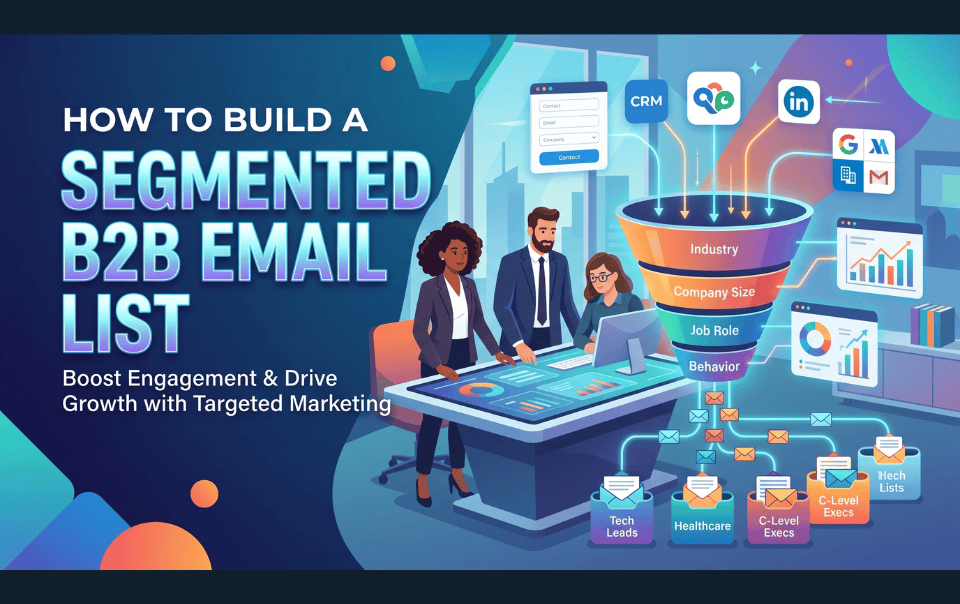
A well-segmented B2B email list helps businesses connect with the right decision-makers, improve campaign performance, and generate qualified leads. Whether you build your list internally or work with a trusted data provider, success depends on having accurate and relevant contact data.
In this guide, you’ll learn how to build, segment, and maintain a high-quality B2B email list that supports lead generation, sales outreach, and B2B email marketing efforts.
What Is B2B Email List Building?
B2B email list building is the process of creating a database of business contacts that match your target audience. These contacts can then be used for marketing campaigns, sales outreach, and lead generation activities.
A typical B2B email list may include:
- Contact Name: Helps personalize communication and improve engagement.
- Business Email Address: Enables direct communication with prospects.
- Job Title: Helps identify decision-makers and influencers.
- Company Information: Provides context for targeted outreach.
- Industry and Firmographic Data: Supports audience segmentation and personalization.
A well-maintained B2B email list serves as the foundation for successful outreach campaigns.
Why Segmentation Matters More Than Ever in 2026
Modern buyers expect relevant communication. Sending the same message to every prospect often results in lower engagement and missed opportunities.
- Improved Personalization: Segmentation allows businesses to tailor messaging based on industry, job role, or company size.
- Better Engagement Rates: Relevant content is more likely to generate opens, clicks, and responses.
- More Effective Cold Email Outreach: Sales teams can create targeted messages that address specific business challenges.
- Higher Conversion Potential: Reaching the right audience with the right message improves the chances of generating qualified leads.
As competition for attention increases, segmentation has become a key factor in campaign success.
Essential Components of a High-Quality B2B Email List
The effectiveness of your outreach depends on the quality of your data. A strong B2B email list should contain accurate and actionable information.
- Verified Email Addresses: Help reduce bounce rates and improve deliverability.
- Accurate Contact Information: Ensures outreach reaches the intended recipient.
- Decision-Maker Data: Helps sales and marketing teams focus on contacts with purchasing influence.
- Firmographic Information: Includes details such as industry, company size, revenue, and location.
- Updated Records: Keeps your database relevant as contacts and organizations change over time.
High-quality data often delivers better results than a larger list filled with outdated or irrelevant contacts.
How to Build a Segmented B2B Email List Step by Step
Building a B2B email list requires a structured approach. Following these steps can help improve data quality and campaign performance.
Step 1: Define Your Ideal Customer Profile (ICP)
Identify the type of companies most likely to benefit from your product or service.
Consider factors such as:
- Industry
- Company size
- Revenue range
- Geographic location
Step 2: Identify Key Decision-Makers
Focus on contacts who influence purchasing decisions.
Common targets include:
- CEOs
- CFOs
- CIOs
- CMOs
- Directors and Managers
Step 3: Collect Relevant Contact Data
Businesses can gather contact information from:
- Website inquiries
- Events and webinars
- Referrals
- Professional networks
- Business databases
- Trusted email list providers
Step 4: Verify Contact Information
Validating contact data helps:
- Reduce bounce rates
- Improve email deliverability
- Protect sender reputation
- Enhance the performance of sales outreach tools and email campaigns
Step 5: Segment Your Contacts
Organize contacts based on:
- Industry
- Job title
- Company size
- Revenue
- Location
Step 6: Keep Data Updated
Regular updates help maintain list accuracy and improve campaign effectiveness.
DIY vs. Data Provider: Two Ways to Build Your List
Businesses can build B2B email lists internally, work with a data provider, or combine both approaches. The best option depends on available resources, timeline, and growth objectives.
Building Your List Internally
- Greater Control: Businesses can define their own targeting criteria and qualification process.
- Organic Growth: Contacts collected through inbound channels often have existing interest in your brand.
- Long-Term Investment: Internal list building takes time but helps create a proprietary database.
Working with a Data Provider
- Faster Access to Prospects: Businesses can quickly reach targeted audiences without extensive research.
- Scalable Outreach: Many organizations use email list providers to expand into new industries, regions, and markets.
- Advanced Targeting: Contact lists can often be filtered by job title, industry, revenue, location, and more.
Many organizations combine both strategies to balance organic growth with scalable lead generation.
Best Segmentation Strategies for B2B Email Marketing
Segmentation helps businesses deliver more relevant messages to the right audience. The more targeted your list is, the better your chances of generating engagement and conversions.
- Industry Segmentation: Group contacts by industries such as healthcare, technology, finance, manufacturing, or retail. This allows you to address industry-specific challenges and goals.
- Job Title Segmentation: Separate decision-makers based on their roles. A CFO may be interested in cost savings, while a CIO may focus on technology solutions.
- Company Size Segmentation: Small businesses, mid-market companies, and enterprises often have different priorities, budgets, and buying processes.
- Geographic Segmentation: Tailor campaigns based on country, region, or market to improve relevance and compliance.
- Revenue-Based Segmentation: Companies with different revenue ranges may require different messaging and solutions.
- Department-Based Segmentation: Marketing, IT, HR, Operations, and Finance teams often respond to different value propositions.
Effective segmentation helps improve personalization and supports stronger B2B email marketing results.
How to Maintain a Healthy B2B Email List
Building a list is only the first step. Maintaining data quality is equally important for long-term success.
- Remove Invalid Contacts: Inactive or incorrect email addresses can increase bounce rates and affect deliverability.
- Update Job Changes: Professionals frequently change roles and companies, making regular updates essential.
- Eliminate Duplicate Records: Duplicate contacts can create reporting issues and negatively impact the customer experience.
- Refresh Company Information: Revenue, employee size, and company details may change over time.
- Monitor Engagement Levels: Regularly review opens, clicks, and responses to identify inactive contacts.
A clean and updated database not only improves campaign performance but also helps businesses get more value from their CRM platforms and sales outreach tools.
Common B2B Email List Building Mistakes
Even a large contact database can underperform if common mistakes are overlooked.
- Focusing on Quantity Over Quality: Thousands of unqualified contacts rarely outperform a smaller, targeted audience.
- Ignoring Segmentation: Sending the same message to every prospect often leads to lower engagement.
- Using Outdated Data: Old contact information can result in bounced emails and missed opportunities.
- Skipping Data Verification: Unverified records may affect deliverability and sender reputation.
- Failing to Update the Database: B2B data changes frequently, making regular maintenance essential.
Avoiding these mistakes can help businesses maximize the value of their B2B email lists.
How DataCaptive Supports B2B Email List Building
Businesses have different approaches to B2B email list building. Some prefer to build lists internally, while others look for faster ways to reach targeted prospects. DataCaptive supports both strategies.
Customized Contact Databases
Organizations can share their targeting requirements, including:
- Industry
- Job title
- Company size
- Revenue range
- Geographic location
Based on these requirements, DataCaptive can help provide a targeted business contact database aligned with specific campaign goals.
Support for Internal List-Building Efforts
Businesses that build lists internally can use DataCaptive to:
- Expand audience reach
- Fill data gaps
- Improve segmentation
- Access additional decision-maker contacts
Data for Sales and Marketing Teams
Targeted business data can support:
- B2B email marketing
- Lead generation
- Cold email outreach
- Account-based marketing
- Sales prospecting
Whether you’re starting from scratch or strengthening an existing database, access to relevant contact data can help improve outreach efficiency.
Conclusion
Building a segmented B2B email list is essential for reaching the right prospects, improving campaign performance, and generating qualified leads. Whether you choose to build your database internally or work with a trusted data provider, success depends on maintaining accurate, targeted, and up-to-date contact information.
Many businesses combine both approaches—growing their databases organically while leveraging trusted data sources to scale outreach faster. DataCaptive supports this process by helping organizations access customized business contact data based on their specific targeting requirements, including industry, job title, company size, revenue, and location.
With the right data strategy and audience segmentation, businesses can improve their B2B email marketing, cold email outreach, and lead generation efforts while reaching decision-makers more effectively. With the right data strategy and audience segmentation, businesses can improve their B2B email marketing, cold email outreach, and lead generation efforts while reaching decision-makers more effectively.
FAQs