
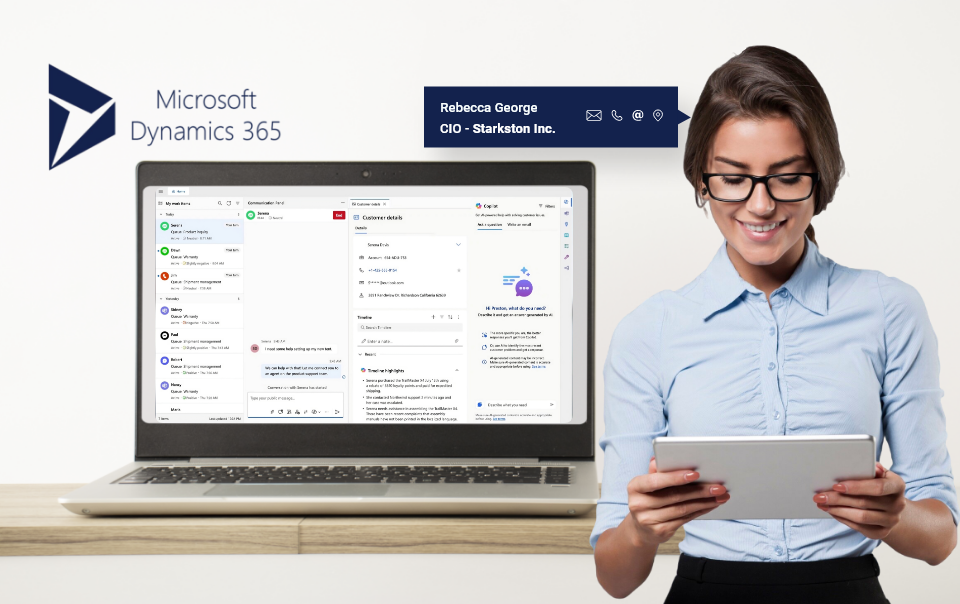
Looking for a list of companies using Microsoft Dynamics 365? Many businesses use Dynamics 365 to manage customer relationships, sales, finance, operations, customer service, and other business processes from a connected business platform.
This article provides a list of companies using Microsoft Dynamics 365, including organizations that use Dynamics 365 CRM and other Microsoft business applications. It can help sales teams, marketers, technology vendors, consultants, and researchers identify businesses that use Microsoft Dynamics solutions.
If you are specifically looking for companies that use Microsoft Dynamics CRM, the list below provides a starting point for identifying potential prospects and understanding how organizations use Microsoft’s CRM technology.
In this article, we explore companies using Microsoft Dynamics 365, the industries and markets where adoption is strong, and how businesses can identify and target relevant Dynamics 365 users for growth and lead generation.
Some well-known organizations use Microsoft Dynamics 365 across areas such as sales, customer service, finance, supply chain, and business operations. Companies using Microsoft Dynamics 365 can include organizations from retail, manufacturing, healthcare, financial services, technology, transportation, and other industries.
The following list highlights companies reported to use Microsoft Dynamics 365 or Microsoft Dynamics CRM and the business areas where the platform may support their operations.
Current third-party estimates range from around 13,000 detected domains to more than 34,000 companies using Microsoft Dynamics 365. Therefore, these figures should be treated as estimates rather than an exact global customer count.
Microsoft Dynamics 365 is used across a wide range of organizations, from global enterprises to mid-market businesses. Companies adopt different Dynamics 365 applications depending on their operational requirements, including CRM, finance, sales, customer service, supply chain, and business intelligence.
Below are examples of well-known organizations reported as Dynamics 365 users. The specific applications and deployment scope can vary by business unit, geography, and implementation.
From mid-size enterprises to Fortune 500 corporations, these Dynamics 365 users often invest in extended technology stacks — from analytics platforms to AI enhancements — opening many upselling, cross-selling, and strategic partnership paths.
| Company | Industry | Common Business Applications |
|---|---|---|
| Walmart | Retail | Supply Chain, Operations |
| Coca-Cola | Food & Beverage | Sales, Customer Management |
| Chevron | Energy | Finance, Operations |
| General Electric | Industrial | Operations, Analytics |
| Delta Air Lines | Aviation | Customer Service, Marketing |
| PepsiCo | Food & Beverage | Sales, Distribution, Logistics |
| John Deere | Manufacturing | Supply Chain, Operations |
| 3M | Manufacturing | Customer Management, Operations |
| Ford Motor Company | Automotive | Sales, Customer & Dealer Operations |
| Microsoft | Technology | Sales, Customer Service, Finance, Operations |
Manufacturers use Dynamics 365 to support production planning, inventory, supply chain management, sales, and customer service.
Retail organizations can use Dynamics 365 to manage customer relationships, commerce operations, inventory, sales, and omnichannel experiences.
Financial organizations use business applications to manage customer interactions, operational workflows, reporting, and service processes.
Healthcare organizations can use Dynamics 365 for customer engagement, service management, operational workflows, and data-driven decision-making.
Automotive companies and dealer networks can use Dynamics 365 to support sales, customer service, dealer relationships, and operational processes.
Companies use different Dynamics 365 applications depending on their business requirements. Common use cases include:
Finance teams use Dynamics 365 applications to support accounting, budgeting, financial reporting, procurement, and business operations.
Manufacturers and distributors can use Dynamics 365 to manage inventory, procurement, production, logistics, and supply chain processes.
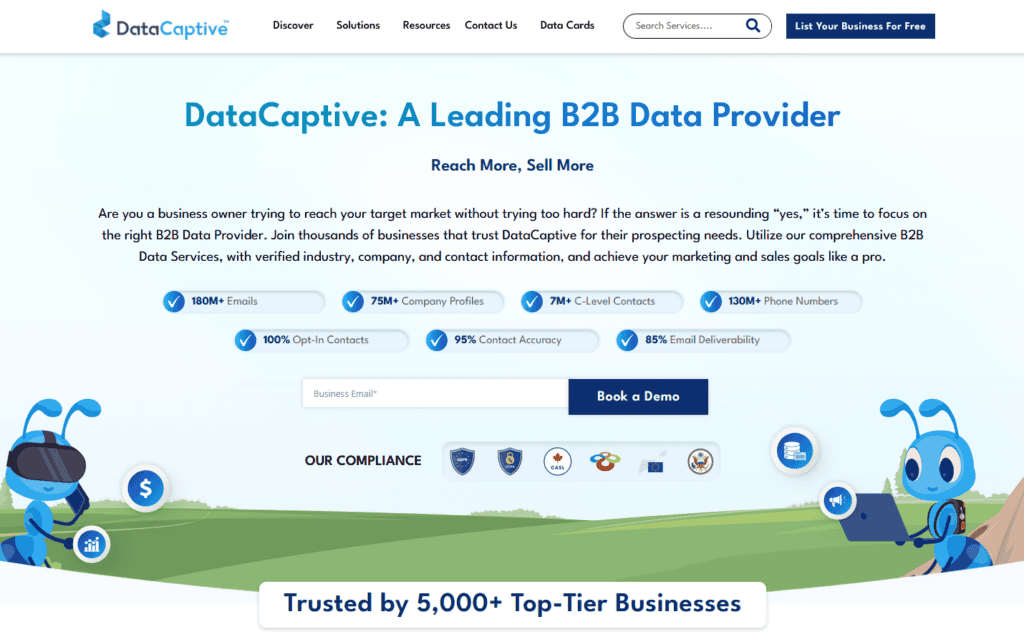
DataCaptive’s Microsoft Dynamics 365 Customers List is purpose-built for B2B marketers, sales teams, and technology vendors aiming to connect with organizations actively using Dynamics 365 across sales, finance, operations, and customer service. Our database goes beyond generic technology lists by delivering verified, intent-ready contacts from companies that have already invested in Microsoft’s ecosystem—helping you shorten sales cycles and improve campaign ROI.
We combine advanced data validation, strict compliance standards, and deep technology intelligence to ensure you reach the right decision-makers at the right companies. Whether you’re promoting ERP integrations, cloud services, consulting solutions, or SaaS tools, our list enables precise, scalable outreach across global markets.
With DataCaptive, you gain a reliable, scalable way to engage high-intent Microsoft Dynamics 365 customer accounts and drive measurable B2B growth.
Targeting companies that use Microsoft Dynamics 365 increases the relevance of your marketing and sales outreach. These companies are typically forward-thinking, digitally mature, and invested in cloud technologies. A verified Microsoft Dynamics 365 user list enables you to focus on prospects more likely to convert, partner, or adopt complementary solutions — leading to improved ROI and deeper integrations.
Whether you’re selling integrations, consulting services, or software extensions for CRM/ERP, understanding and targeting companies using Microsoft Dynamics 365 gives you a competitive edge.
You can get a verified Microsoft Dynamics 365 customers list from trusted B2B data providers like DataCaptive, which specializes in technology databases. These lists are accuracy-verified, opt-in compliant, and segmented by industry, company size, location, and decision-maker roles for targeted outreach.
A Microsoft Dynamics 365 users email list allows you to target CIOs, IT managers, CRM administrators, finance leaders, operations heads, and digital transformation decision-makers within organizations actively using Dynamics 365 across CRM, ERP, finance, and supply chain functions.
Technology vendors, ERP consultants, SaaS providers, system integrators, cloud service firms, and B2B marketers can utilize a Dynamics 365 users list to promote integrations, upgrades, consulting services, analytics tools, and complementary enterprise solutions.
Industries using Microsoft Dynamics 365 most frequently include manufacturing, retail, healthcare, financial services, logistics, automotive, education, and energy. These sectors rely on Dynamics 365 for operational efficiency, customer engagement, compliance management, and real-time business insights.
Yes, small and mid-sized businesses benefit from Microsoft Dynamics 365 because its modular, cloud-based architecture allows them to deploy only required applications, scale affordably, reduce infrastructure costs, and gain enterprise-grade CRM and ERP capabilities as they grow.
You can find companies using Microsoft Dynamics 365 through B2B data providers like DataCaptive, LinkedIn Sales Navigator technology filters, web technology research tools, Microsoft partner case studies, and industry-specific ERP adoption reports.
Targeting Microsoft Dynamics 365 customer companies delivers strong ROI because these organizations are digitally mature, budget-ready, and actively invest in integrations, add-ons, consulting, and optimization—making them ideal prospects for high-value B2B solutions.
Request a Sample Email List Today
