
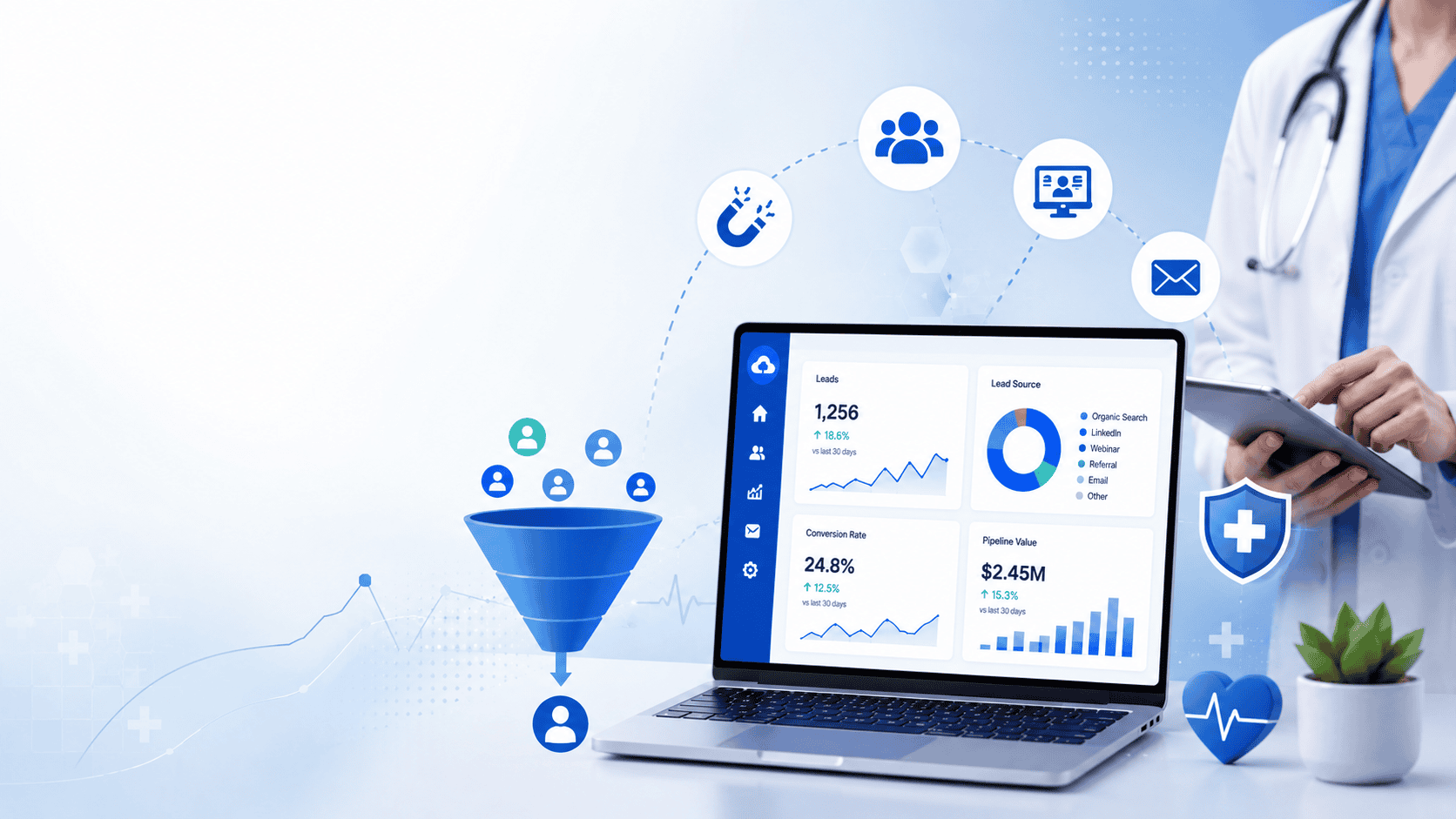
Generating high-quality leads in the healthcare industry is not as straightforward as in other B2B sectors. Strict regulations, long sales cycles, and complex decision-making structures make it challenging for companies to consistently acquire and convert prospects. That’s why businesses must adopt specialized strategies to generate leads for Healthcare IT & SaaS businesses effectively.
Healthcare IT and SaaS companies offering solutions like EHR systems, telehealth platforms, AI diagnostics, and hospital management software need to reach highly specific audiences. These include hospital executives, CIOs, procurement teams, and medical directors who play a direct role in purchasing decisions.
Traditional lead generation tactics often fall short in this space. Instead, success depends on targeted outreach, data-driven marketing, and personalized engagement.
👉 In this guide, you’ll discover proven strategies to attract, nurture, and convert high-value healthcare leads effectively across the USA.
Healthcare IT & SaaS lead generation refers to the process of identifying, attracting, and nurturing potential customers like hospitals, clinics, and healthcare organizations, and converting them into qualified prospects.
Unlike general B2B lead generation, healthcare marketing requires:
Effective healthcare SaaS marketing strategies combine content, data, and outreach to engage key stakeholders across the US healthcare market.
👉 Now that you understand what healthcare IT lead generation involves, let’s explore why it is essential for business growth.
Lead generation is the backbone of growth for healthcare technology companies. Here’s why:
Key Reasons:
Without a strong B2B healthcare lead generation strategy, even the best solutions may struggle to gain traction.
👉 This highlights the need for a structured and targeted lead generation approach.
To generate high-quality leads, identifying and targeting the right audience is essential. Understanding who makes decisions helps you focus your marketing efforts effectively and improve conversions.
👉 Once you clearly define your ideal target audience, the next step is to engage them using the right marketing strategies and data-driven outreach.
Get 100% verified Medical Executives Email List and connect directly with healthcare leaders to improve outreach and engagement.
Best Channels to Generate Healthcare IT Leads in the USA
Choosing the right channels ensures consistent lead flow and better engagement.
To attract these decision-makers, businesses must use a combination of digital and data-driven strategies.
Effective lead generation in the healthcare IT and SaaS space starts with building awareness, educating your audience, and positioning your brand as a trusted solution provider.
Content marketing remains one of the most reliable ways to attract healthcare professionals and decision-makers. High-quality, informative content helps establish authority while addressing real industry challenges faced by hospitals and healthcare organizations.
Best Practices:
Example: A whitepaper on “Improving Patient Outcomes with AI” can attract hospital executives and technology leaders.
Search engine optimization plays a crucial role in driving organic traffic and ensuring your content reaches the right audience.
GEO Optimization Tips:
This ensures visibility among healthcare organizations actively searching for solutions.
LinkedIn is one of the most effective platforms for B2B healthcare marketing. It enables direct engagement with hospital leadership and decision-makers.
Strategies:
Paid campaigns help accelerate lead generation by targeting high-intent audiences.
Key Channels:
Webinars provide an excellent opportunity to educate and engage healthcare professionals.
Benefits:
Buying an email list from a reliable provider is one of the fastest ways to reach high-value healthcare decision-makers in the USA. Instead of spending months building contacts, businesses can instantly access targeted, verified, and opt-in email databases to accelerate their outreach efforts.
A trusted data provider like DataCaptive ensures high data accuracy, compliance, and deliverability, helping you connect directly with professionals such as hospital executives, IT leaders, and healthcare administrators.
Benefits of Using Verified Email Lists:
“Reach top medical executives with our targeted, 100% verified email list. Connect with decision-makers, boost engagement, and drive qualified leads using accurate, compliant healthcare data for successful outreach campaigns.”
Experience the Quality of Our Data!
👉 Attracting leads is only the first step; nurturing them is what drives conversions.
In the healthcare industry, decision-making takes time. Consistent engagement and personalized communication are essential.
Email marketing is a powerful strategy for nurturing leads and building long-term relationships. It allows businesses to deliver personalized, relevant content directly to decision-makers.
A well-structured campaign keeps your brand top-of-mind and gradually moves prospects toward conversion.
📧 Best Practices:
“Generating leads through email marketing campaigns, content marketing, SEO & GEO optimization, and LinkedIn marketing takes time and resources. Use a pre-customized, ready-made ICP based Medical Executives Email List to instantly launch campaigns and accelerate results.”
A healthcare SaaS company offering a telehealth platform wanted to promote its solution to hospitals across the USA. Initially, they used a generic contact database, which resulted in low open rates (below 10%) and minimal engagement.
After switching to a targeted and verified Medical Executives Email List, they were able to specifically target hospital CIOs, CMOs, and administrators with personalized email campaigns.
By segmenting the list based on job roles and location, they sent tailored messages addressing key challenges like remote patient care and operational efficiency. By segmenting the list based on job roles and location, they sent tailored messages addressing key challenges like remote patient care and operational efficiency.
📊 Results:
This case study shows how accurate, verified healthcare contacts combined with personalized email campaigns can dramatically improve engagement and lead nurturing success.
👉 Looking to find a verified Medical Executives Email List? Read this article: “How To Find Medical Executives Emails and Contact Numbers?” to explore accurate contact data.
🔄 Benefits:
Case studies build trust by showing real-world success.
📌 Include:
🔁 Benefits:
👉 At this stage, prospects are actively evaluating solutions, comparing vendors, and looking for proven value. This makes timely, personalized, and value-driven engagement crucial to move them toward a final decision.
Personalized outreach is one of the most effective ways to convert leads into customers. Decision-makers expect communication that directly addresses their specific challenges, goals, and organizational needs.
Having a verified and segmented Medical Executives Email List will help businesses in connecting with healthcare leaders such as hospital executives, medical directors, and administrators through highly targeted messaging. This allows you to craft emails that focus on key pain points like improving patient care, reducing operational costs, or enhancing system efficiency.
Product demonstrations are essential for helping prospects understand how your solution works in a real-world healthcare environment. A well-structured demo allows you to highlight key features, use cases, and measurable benefits.
Offering both live and recorded demos ensures flexibility for busy healthcare professionals. Live demos enable real-time interaction and Q&A, while recorded demos allow prospects to explore your solution at their convenience.
📌 Why Product Demos Work:
A compelling demo can be the deciding factor that moves a prospect closer to purchase.
Free trials give prospects the opportunity to experience your solution firsthand, reducing uncertainty and building confidence. In the healthcare IT and SaaS space, where decisions involve significant investment, hands-on experience is highly valuable.
By allowing users to explore features, test usability, and evaluate performance, you help them understand how your solution fits into their workflow.
📌 Best Practices:
Free trials not only increase engagement but also accelerate the decision-making process.
📊 Equip Teams With:
By empowering your sales team with the right resources, you enable them to engage prospects more effectively, build stronger relationships, and close deals with confidence.
Compliance is critical in healthcare marketing, as it directly impacts trust and credibility.
Key Regulations:
Always ensure compliance to avoid legal risks.
To successfully generate leads for Healthcare IT & SaaS businesses, companies must adopt a strategic and data-driven approach.
From content marketing to personalized outreach, every stage plays a crucial role in converting prospects into customers.
By focusing on the right audience with the help of a targeted and verified Medical Executives Email List, businesses can improve reach, increase engagement, and drive higher conversions.
👉 Businesses that combine the right strategy with accurate data gain a strong competitive advantage in the healthcare market.
Healthcare IT and SaaS companies can generate high-quality leads by combining multiple strategies such as content marketing, SEO, LinkedIn outreach, and webinars. Focusing on the right audience and delivering value-driven content helps build trust, improve engagement, and drive better conversions.
For quick and high-quality leads, targeted email campaigns using verified email lists enable businesses to directly connect with key decision-makers, accelerate outreach, and achieve faster, more effective results.
A Medical Executives Email List typically includes contact details of healthcare decision-makers such as CEOs, CMOs, CIOs, and administrators. It may contain names, email addresses, job titles, organization details, and geographic information for targeted outreach.
Email marketing helps nurture leads by delivering personalized and relevant content over time. It keeps prospects engaged, builds trust, and guides them through the decision-making process, ultimately increasing the chances of conversion.
Accurate data ensures your messages reach the right audience, reducing bounce rates and improving engagement. High-quality data leads to better targeting, stronger communication, and higher ROI for healthcare marketing campaigns.
You can get a verified Medical Executives Email List from trusted B2B data providers like DataCaptive. They offer accurate, opt-in, and segmented healthcare data that helps businesses effectively reach key decision-makers and improve campaign performance.
Businesses can improve conversion rates by using personalized messaging, audience segmentation, consistent follow-ups, and value-driven content. Leveraging multiple touchpoints and understanding customer needs also plays a key role in driving conversions.
Get a Sample Email List
