
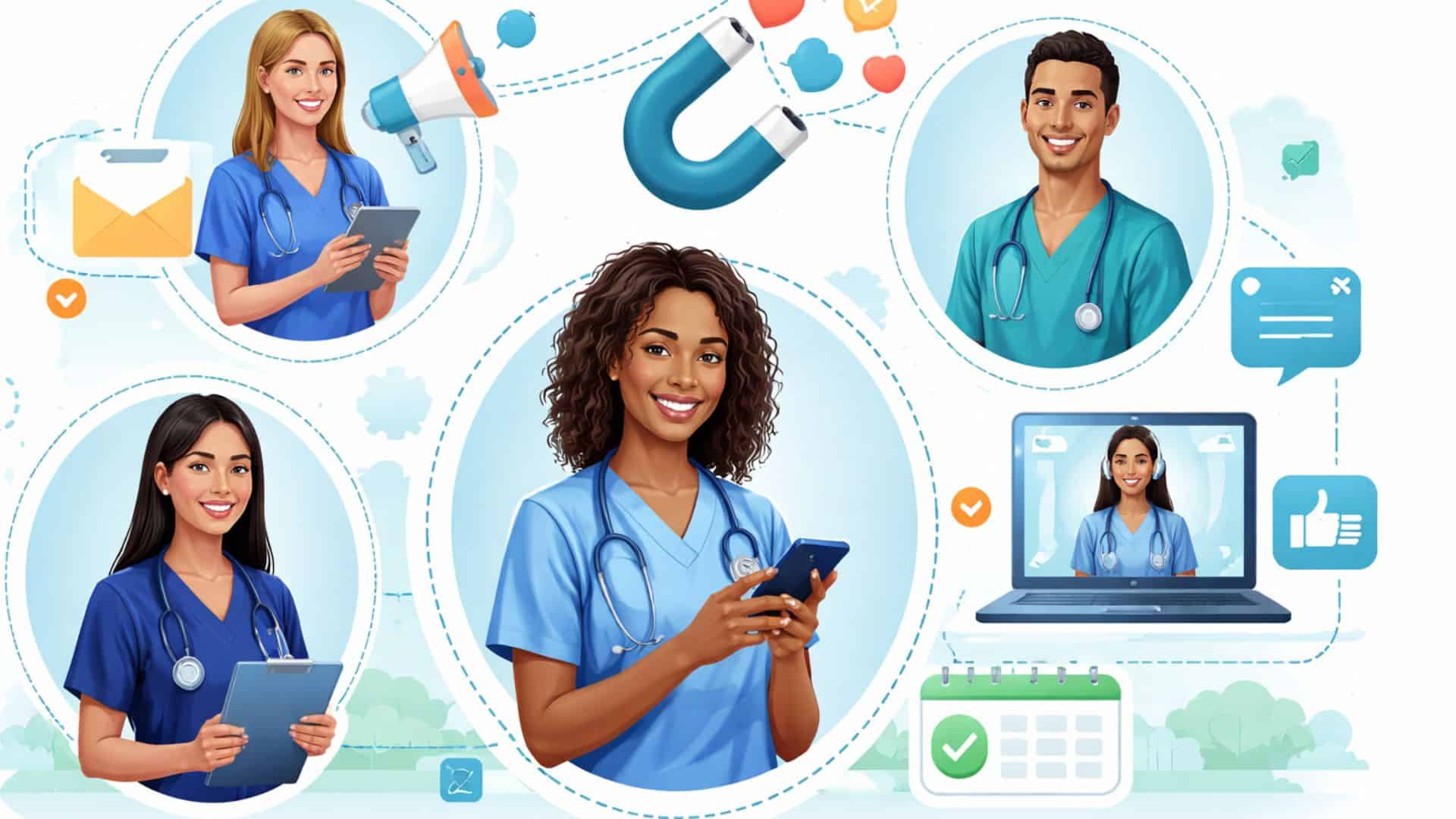
Healthcare staffing firms are facing one of the toughest hiring landscapes in recent years. With the growing demand for qualified professionals, finding and connecting with registered nurses has become increasingly challenging. Traditional sourcing methods are no longer enough, and recruiters often struggle to get timely responses from candidates.
In this article, we will explore the key challenges healthcare staffing firms face in reaching registered nurses, the most effective outreach strategies available today, and how a data-driven approach can simplify and improve recruitment outcomes.
The healthcare industry continues to experience a significant shortage of skilled registered nurses. Staffing firms often compete for a limited talent pool, making it difficult to fill open roles quickly and efficiently.
Even when candidates are available, identifying nurses who are actively looking for opportunities is a major challenge. Many professionals are passive job seekers, making outreach more complex.
Cold calls, generic emails, and job board postings often fail to generate meaningful engagement. Without targeted communication, recruiters struggle to get responses from registered nurses.
Healthcare staffing agencies are competing aggressively for the same candidates. This intense competition reduces the chances of securing top talent without a strategic outreach approach.
Recruiters spend hours searching for candidate information across multiple platforms. This manual effort slows down hiring processes and reduces overall productivity.
Many existing databases contain outdated or incorrect contact details. Poor data quality leads to wasted efforts, bounced emails, and missed opportunities.
The recruitment landscape has evolved significantly, making it harder for staffing firms to connect with registered nurses.
These factors highlight the need for smarter, data-driven outreach methods.
Reaching registered nurses requires a multi-channel strategy. No single approach works in isolation. The most successful healthcare staffing firms combine direct outreach, digital platforms, and data-driven targeting to maximize results. Below are the most effective methods explained in detail.
Email marketing continues to be one of the most powerful and reliable channels for healthcare recruitment. When supported by a registered nurses contact database, it allows staffing firms to connect directly with qualified professionals without relying on intermediaries.
Unlike job boards or social media, email gives you direct access to a nurse’s inbox, making communication more personal and actionable. Recruiters can share job openings, contract opportunities, salary details, and benefits in a structured format that encourages responses.
With segmentation, you can tailor messages based on:
This significantly increases engagement and conversion rates.
Pros:
Limitations:
LinkedIn has become a go-to platform for professional networking and recruitment, especially in healthcare. It allows staffing firms to identify registered nurses based on their experience, skills, and current roles.
Recruiters can send connection requests, InMail messages, and engage with candidates through posts and comments. This approach works particularly well for building relationships over time, rather than immediate hiring.
LinkedIn is also useful for employer branding, where staffing firms can showcase:
However, reaching nurses at scale through LinkedIn can be challenging, especially when targeting large volumes of candidates.
Pros:
Limitations:
Job portals remain a traditional yet relevant method for attracting registered nurses. Platforms like healthcare job boards allow staffing firms to post job openings and receive applications from interested candidates.
These platforms are effective for active job seekers, as they are already searching for opportunities. However, they may not be as effective for reaching passive candidates who are not actively applying for jobs.
Additionally, competition is extremely high, as multiple staffing firms post similar job listings. Without premium placements, your job postings can easily get lost.
Pros:
Limitations:
Referral programs are one of the most trusted ways to recruit registered nurses. Existing employees, partners, or industry connections can recommend qualified candidates, often leading to higher-quality hires.
Referrals work well because they come with a built-in trust factor, reducing the time needed for screening and validation. Many healthcare staffing firms incentivize referrals through bonuses or rewards.
Pros:
Limitations:
Paid advertising on platforms like search engines and social media can help staffing firms quickly attract registered nurses. Ads can be targeted based on demographics, location, job role, and interests.
This method is particularly useful for:
While paid ads deliver quick results, they require careful planning and continuous optimization to maintain performance.
Pros:
Limitations:
Content marketing focuses on attracting registered nurses through valuable and informative content. This includes blogs, career guides, salary insights, and industry trends.
By providing helpful resources, healthcare staffing firms can position themselves as trusted authorities in the industry, making candidates more likely to engage.
Content also plays a key role in SEO, helping firms rank on search engines and attract organic traffic over time.
Examples of effective content include:
However, content marketing is a long-term strategy and does not deliver instant results.
Pros:
Limitations:
Even when healthcare staffing firms invest in multiple recruitment channels, the results often fall short of expectations. The problem is not the lack of effort—it’s the lack of precision, data quality, and personalization in execution. Here are the key reasons why most outreach strategies fail:
Many staffing firms rely on broad, generic outreach campaigns that are not tailored to specific nurse profiles. Without clearly defining factors like specialization, experience level, or location, messages are sent to the wrong audience. As a result, even well-crafted campaigns fail to generate meaningful responses because they simply don’t match the candidate’s needs or interests.
Outreach efforts are only as effective as the data behind them. When contact information is outdated, incomplete, or inaccurate, recruiters face issues like bounced emails, failed connections, and wasted effort. Poor-quality data not only reduces campaign performance but also impacts sender reputation and deliverability over time.
Registered nurses receive numerous job-related messages daily. If your communication feels generic or irrelevant, it is likely to be ignored. Messages that lack personalization—such as addressing the candidate’s role, skills, or career goals—fail to capture attention or build trust, leading to low engagement rates.
Sending the same message to every contact is one of the most common mistakes in recruitment outreach. Without segmenting candidates based on criteria like location, specialty, or experience, the message loses relevance. This “one-size-fits-all” approach significantly reduces open rates, responses, and conversions.
To achieve better results, healthcare staffing firms need a more targeted, data-driven, and personalized approach. By focusing on accurate data, proper segmentation, and tailored messaging, recruiters can significantly improve outreach effectiveness and connect with registered nurses more successfully.

To overcome modern recruitment challenges, healthcare staffing firms need more than traditional sourcing methods. The most reliable and efficient solution is using a verified registered nurses email list, which provides direct access to qualified professionals without delays or guesswork.
This is where DataCaptive’s Registered Nurses Email List gives you a strong competitive advantage. Instead of spending time searching for candidates across multiple platforms, you get ready-to-use, accurate, and highly targeted contact data that helps you connect with the right nurses instantly.
DataCaptive offers a comprehensive and high-quality database designed specifically for healthcare recruitment needs:
Using a verified registered nurses email list directly addresses the most common challenges faced by staffing firms:
Experience the Quality of Our Data!
A verified registered nurses email list is not just a data resource—it is a strategic recruitment tool that enables healthcare staffing firms to move faster, target smarter, and hire more efficiently in a highly competitive market.
Segment your registered nurses email list based on location, specialization, and experience level. This helps deliver highly relevant messages, improves engagement rates, and ensures your outreach reaches the most suitable candidates effectively.
Personalize your email campaigns by addressing candidates by name and tailoring content to their skills, roles, or interests. This approach builds trust, increases engagement, and significantly improves response rates from registered nurses.
Create clear, compelling, and relevant subject lines that capture attention quickly. Strong subject lines improve email open rates, encourage engagement, and ensure your message stands out among multiple recruitment emails received by nurses.
Implement a structured follow-up strategy by sending timely reminders to candidates who did not respond initially. Consistent follow-ups increase response rates, improve engagement, and maximize the effectiveness of your recruitment campaigns.
Track key email metrics such as open rates, click-through rates, and conversions. Analyzing performance helps identify what works, optimize future campaigns, and improve overall recruitment efficiency and outreach results.
Healthcare staffing firms can reach registered nurses easily by using targeted strategies such as email marketing, LinkedIn outreach, and verified contact databases. A registered nurses email list provides direct access to qualified candidates, improving response rates and recruitment efficiency.
A registered nurses email list is a database containing verified contact details of nursing professionals. It typically includes email addresses, job titles, locations, and other relevant information, enabling healthcare staffing firms to connect directly with potential candidates.
Data accuracy is crucial because outdated or incorrect contact information leads to failed outreach efforts. Using a verified nurse email list ensures higher deliverability, better engagement, and improved recruitment outcomes for healthcare staffing firms.
The best strategies include targeted email campaigns, personalized outreach, LinkedIn networking, and leveraging verified contact databases. Combining these approaches helps healthcare staffing firms reach qualified nurses effectively and stay competitive in the market.
Get a Sample Email List
