Quick Answer
If you’re trying to reach the people who make purchasing decisions, business owner contacts are one of the most valuable assets for sales and marketing teams. Instead of spending hours searching for the right decision-maker, a verified business owner database helps you identify founders, CEOs, presidents, and owners based on industry, company size, location, and other firmographic filters.
Whether you’re generating B2B leads, launching ABM campaigns, recruiting business leaders, or expanding into new markets, having access to accurate business owner contact information improves outreach efficiency, increases response rates, and accelerates revenue growth.
Key Takeaways
- Business owner contacts help you connect directly with key decision-makers.
- Verified contact data improves campaign accuracy and reduces bounced emails.
- Filter contacts by industry, company size, revenue, location, SIC, NAICS, and executive role.
- A regularly updated B2B contact database saves significant research time.
- Combining verified contact data with personalized outreach improves conversion rates.
Who Should Read This Guide?
This guide is designed for:
- B2B Sales Teams
- SDRs and BDRs
- Marketing Teams
- Demand Generation Teams
- Recruiters
- Staffing Agencies
- Investors
- Technology Vendors
- Consulting Firms
- Franchise Development Teams
Whether you’re building prospect lists or launching targeted marketing campaigns, understanding how to find and use business owner contacts effectively can improve your results.
What Are Business Owner Contacts?
Business owner contacts refer to verified professional information about individuals who own, manage, or make strategic decisions for a company. These contacts typically include business email addresses, direct phone numbers, company details, executive titles, and firmographic attributes that help organizations identify and reach the right decision-makers.
Unlike generic company information, business owner contacts focus on individuals with purchasing authority, making them particularly valuable for B2B sales, partnerships, and account-based marketing.
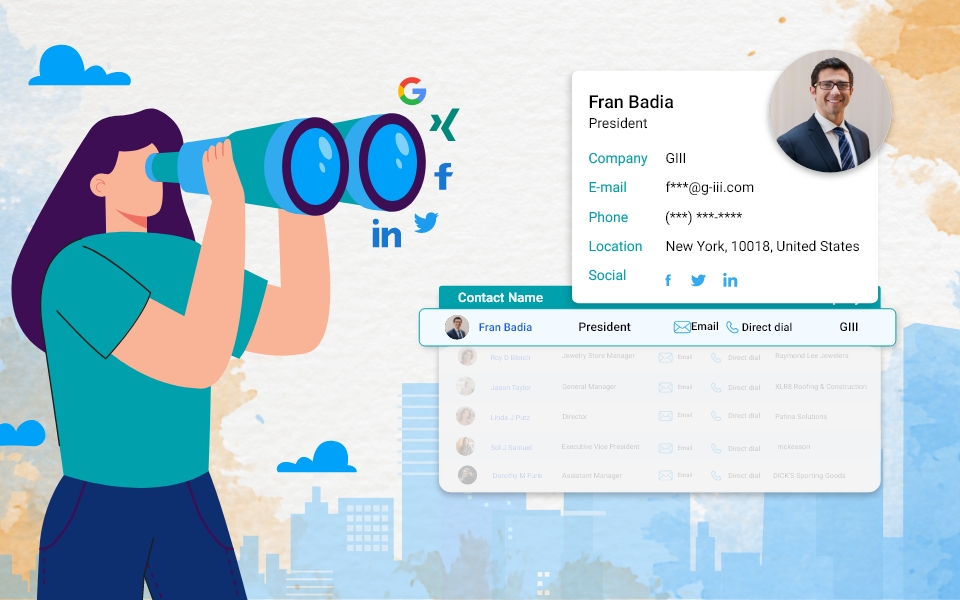
A typical business owner profile may include:
Having access to these details enables organizations to build highly targeted prospect lists and communicate with the right people instead of relying on generic inboxes or gatekeepers.
Why Business Owner Contacts Matter
Decision-makers receive countless sales pitches every day. Contacting the wrong person often results in delayed responses or no response at all. Access to verified business owner contacts helps organizations engage directly with individuals who have the authority to evaluate products, approve budgets, and make purchasing decisions.
- Shorter sales cycles
- Higher email deliverability
- Better campaign ROI
- Improved personalization
- More qualified meetings
- Stronger account-based marketing strategies
- Reduced time spent on manual prospecting
When sales and marketing teams work with accurate data, they spend less time searching for contacts and more time building relationships.
Why Businesses Need Verified Business Owner Contacts
Business owner data supports multiple business functions beyond sales. Here are some common use cases:
B2B Sales
Sales representatives use verified owner contacts to reach executives directly, reducing gatekeepers and increasing the likelihood of meaningful conversations.
Digital Marketing
Marketing teams create highly targeted email campaigns based on industry, location, company size, and executive role, leading to better engagement and conversion rates.
Account-Based Marketing (ABM)
ABM campaigns rely on identifying buying committees and decision-makers within high-value accounts. Business owner contacts help marketers personalize messaging for each stakeholder.
Recruitment
Recruiters use executive contact information to connect with founders, business owners, and hiring managers at companies actively expanding their workforce.
Business Development
Organizations seeking partnerships, franchise opportunities, or strategic alliances benefit from direct access to company leadership.
What Information Should a Quality Business Owner Database Include?
Not all business databases are created equal. A high-quality database should provide more than just names and email addresses.
- Verified business email addresses
- Direct dial phone numbers
- Company hierarchy
- Executive roles
- Industry classification
- Revenue estimates
- Employee count
- Geographic filters
- Technology usage (technographics)
- Company growth indicators
- Data refresh frequency
- Compliance with privacy regulations
Comprehensive data enables more accurate targeting and better campaign performance.
Business Owner Contacts vs. Generic Business Contacts
Not all business contacts provide the same value.
For organizations focused on B2B sales and strategic growth, direct access to business owners and executive leadership can significantly improve prospecting efficiency.
8 Proven Ways to Find Business Owner Contacts
There are multiple ways to find business owner contacts, but not all methods offer the same level of accuracy, scalability, or efficiency. Your choice depends on your business goals, available resources, and the size of your target market.
1. Use a Verified B2B Contact Database
The fastest and most scalable way to find business owner contacts is through a verified B2B contact database. Instead of manually searching thousands of businesses, you can apply filters such as industry, company size, location, revenue, and executive title to generate a targeted list within minutes.
A reliable B2B database typically provides:
- Verified business email addresses
- Direct phone numbers
- Executive job titles
- Company firmographics
- Geographic segmentation
- Export-ready contact lists
This approach is particularly effective for organizations running outbound sales campaigns, account-based marketing (ABM), or market expansion initiatives.
Best for: Sales teams, marketers, recruiters, and business development professionals.
2. Explore Company Websites
Many businesses publish leadership information on their websites, especially on pages such as:
- About Us
- Leadership Team
- Executive Management
- Our Team
- Company Directory
While this information can help identify decision-makers, it often lacks direct contact details and requires additional research.
- Free source of information
- Reliable company details
- Useful for understanding organizational structure
- Time-consuming
- Limited contact information
- Difficult to scale
3. Use Professional Networking Platforms
Professional networking platforms allow users to identify business owners, founders, executives, and department heads based on company and job title.
These platforms are useful for:
- Researching prospects
- Understanding company hierarchy
- Personalizing outreach
- Building professional relationships
However, manual research can become impractical when targeting hundreds or thousands of companies.
4. Attend Industry Events and Trade Shows
Industry conferences, exhibitions, and networking events provide opportunities to connect directly with business owners and executives.
Benefits include:
- Face-to-face conversations
- Stronger relationship building
- Higher trust
- Better understanding of business needs
After the event, organize and enrich collected contact information before adding it to your CRM.
5. Join Business Associations
Local and industry-specific business associations often maintain member directories that include company executives and owners.
These directories can be valuable when targeting specific industries such as healthcare, manufacturing, construction, or financial services.
6. Leverage Referrals and Existing Networks
Current customers, partners, and professional contacts can introduce you to other business owners within their network.
Referral-based introductions often generate higher response rates because they begin with an element of trust.
7. Monitor Business News and Growth Signals
Companies that announce funding rounds, office expansions, mergers, acquisitions, executive appointments, or rapid hiring often have active purchasing initiatives.
Monitoring these growth signals helps identify organizations that may be evaluating new products or services.
Examples include:
- Company expansion
- New product launches
- Funding announcements
- Executive leadership changes
- Technology adoption
- Geographic expansion
These events create timely opportunities for outreach.
8. Combine Multiple Data Sources
The most effective prospecting strategies rarely rely on a single source.
Many organizations combine:
- Verified B2B databases
- Company websites
- Professional networking research
- CRM data
- Customer referrals
- Marketing engagement data
This layered approach creates a more complete view of each prospect and supports better personalization.
How to Choose the Right Business Owner Database
Not every contact database offers the same level of data quality. Choosing the right provider directly impacts campaign performance, sales productivity, and return on investment.
When evaluating a business owner database, consider the following factors.
Data Accuracy
Outdated or incorrect contact information leads to bounced emails, failed calls, and wasted sales efforts.
Ask questions such as:
- How frequently is the data updated?
- What verification methods are used?
- How is duplicate data managed?
Higher-quality data helps improve campaign effectiveness and sales efficiency.
Industry Coverage
Some providers specialize in specific industries, while others offer broader business coverage.
Ensure the database includes organizations within your target sectors, such as:
- Healthcare
- Manufacturing
- Retail
- Technology
- Financial Services
- Construction
- Education
- Logistics
Some providers specialize in specific industries, while others offer broader business coverage.
Advanced Search Filters
Granular filtering capabilities make it easier to identify highly qualified prospects.
Look for filters including:
- Industry
- Revenue
- Employee count
- Geography
- Executive title
- Company growth stage
- SIC and NAICS codes
- Technology stack
- Years in business
The more precise your search criteria, the more relevant your prospect lists become.
Compliance and Data Privacy
Responsible data providers prioritize compliance with applicable privacy regulations and industry standards.
Before selecting a provider, understand:
- How contact information is sourced
- Data governance practices
- Update processes
- Consent and compliance policies
Working with compliant data providers helps reduce legal and operational risks.
CRM Integration
Your contact database should integrate smoothly with your sales and marketing technology stack.
Common integrations include:
- CRM platforms
- Marketing automation systems
- Sales engagement tools
- Customer data platforms
Reducing manual data entry saves time and improves workflow efficiency.
How DataCaptive Verifies Business Owner Contacts
Accurate data is the foundation of successful prospecting. Even the best outreach strategy cannot deliver strong results if contact information is outdated or incomplete.
At DataCaptive, maintaining data quality is an ongoing process rather than a one-time activity.
Our verification process includes multiple quality assurance steps designed to improve accuracy and reliability.
Multi-Source Data Collection
Business information is gathered from multiple trusted sources to build comprehensive executive profiles.
This approach helps improve data completeness while reducing inconsistencies across records.
Continuous Data Validation
Business information changes frequently as executives change roles, companies relocate, or organizations expand.
Continuous validation helps identify:
- Executive role changes
- Company updates
- Business closures
- Email status changes
- Phone number updates
Regular verification helps maintain data accuracy over time.
Email Verification
Email addresses are validated before being included in the database to reduce invalid records and improve deliverability.
This helps organizations minimize bounced emails and improve campaign performance.
Contact Enrichment
Beyond basic contact information, records can be enriched with valuable business intelligence such as:
- Company revenue
- Employee size
- Industry classification
- Geographic information
- Company growth indicators
- Executive responsibilities
Enriched data supports more personalized outreach.
Ongoing Database Maintenance
Business data evolves constantly.
Regular maintenance helps ensure customers have access to more current information as companies grow, merge, relocate, or update leadership teams.
Industry Use Cases
Business owner contacts provide value across many industries.
SaaS Companies
Software providers use executive contact data to identify organizations evaluating digital transformation initiatives and connect with decision-makers responsible for technology investments.
Marketing Agencies
Agencies build targeted prospect lists based on industry, company size, and location to generate qualified leads for SEO, advertising, branding, and digital marketing services.
Manufacturing
Manufacturers identify distributors, wholesalers, procurement leaders, and company owners responsible for supplier relationships and purchasing decisions.
Healthcare
Healthcare solution providers connect with practice owners, administrators, and executive leadership to introduce medical technologies, software, staffing solutions, and consulting services.
Financial Services
Banks, insurance providers, investment firms, and financial consultants use executive contact data to identify businesses seeking financing, risk management, or wealth management solutions.
Staffing and Recruitment
Recruiters identify founders, HR leaders, and hiring managers responsible for expanding teams and filling specialized positions.
Consulting Firms
Consultants connect directly with executives responsible for strategic planning, operational improvements, compliance initiatives, and organizational growth.
Common Mistakes to Avoid When Using Business Owner Contacts
Having access to business owner contacts is valuable, but the way you use that data determines the success of your campaigns. Many organizations struggle with B2B outreach not because they lack contact information, but because they fail to use data strategically.
Avoid these common mistakes to improve your prospecting results.
1. Targeting the Wrong Decision-Makers
One of the biggest mistakes in B2B outreach is contacting individuals who do not influence purchasing decisions.
For example, reaching an entry-level employee when your solution requires executive approval can create unnecessary delays.
Before launching campaigns, identify:
- Who controls the budget?
- Who evaluates solutions?
- Who influences the final decision?
- Which executive role matches your offering?
The right contact depends on your product, industry, and sales process.
2. Using Outdated Contact Information
Business information changes constantly.
Executives change roles, companies relocate, businesses merge, and email addresses become inactive. Using outdated data can result in:
- High bounce rates
- Wasted sales efforts
- Poor sender reputation
- Lower campaign performance
Regularly refreshed and verified contact data helps maintain outreach quality.
3. Sending Generic Messages
Even with accurate contact information, generic messaging can reduce engagement.
Business owners respond better when communication reflects:
- Their industry
- Their company size
- Their current challenges
- Their business goals
For example, a manufacturing company and a SaaS company may require completely different messaging even if both are potential customers.
4. Ignoring Segmentation
A large contact database is only valuable when it can be segmented effectively.
Avoid sending the same message to every prospect.
Segment contacts based on:
- Industry
- Location
- Company size
- Revenue
- Business model
- Executive role
- Buying stage
Better segmentation leads to more relevant conversations.
5. Focusing Only on Quantity
A large contact list does not automatically produce better results.
A smaller list of highly relevant, verified business owners can outperform thousands of poorly targeted contacts.
Quality prospecting focuses on:
- Accuracy
- Relevance
- Personalization
- Timing
Best Practices for Reaching Business Owners
Business owners are busy professionals who receive numerous messages every day. Successful outreach requires relevance, personalization, and a clear understanding of their priorities.
1. Research Before Contacting
Before reaching out, understand:
- The company’s industry
- Recent business developments
- Growth challenges
- Market position
- Potential needs
This allows you to create messaging that feels relevant rather than promotional.
2. Personalize Your Outreach
Effective personalization goes beyond adding a first name.
Consider referencing:
- Company achievements
- Industry trends
- Recent expansion
- Business challenges
- Relevant solutions
Instead of:
“We help companies improve sales.”
Use:
“We noticed your company is expanding into new markets. Many growing organizations face challenges maintaining accurate prospect data during expansion. We help sales teams identify verified decision-makers in targeted industries.”
3. Use a Multi-Channel Approach
Business owners may respond differently depending on the channel.
Consider combining:
- Email outreach
- Phone conversations
- LinkedIn engagement
- Content marketing
- Industry events
A coordinated approach increases the chances of meaningful engagement.
4. Keep Messages Short and Valuable
Executives have limited time.
A strong first message should:
- Introduce yourself briefly
- Explain the relevance
- Provide value
- Include a simple next step
Avoid lengthy product descriptions during initial outreach.
5. Maintain Data Hygiene
Your contact database should be regularly reviewed and updated.
Best practices include:
- Removing duplicate records
- Updating job changes
- Validating email addresses
- Tracking engagement
- Cleaning inactive contacts
Clean data improves marketing efficiency.
How Business Owner Contacts Improve B2B Sales Performance
Accurate contact data creates advantages throughout the sales funnel.
Prospecting Stage
Sales teams can identify qualified companies faster and focus efforts on high-potential accounts.
Outreach Stage
Personalized campaigns become easier when teams understand who they are contacting.
Qualification Stage
Sales representatives can engage directly with decision-makers and better understand business requirements.
Conversion Stage
Relevant conversations with the right stakeholders improve the likelihood of moving opportunities forward.
Why Choose DataCaptive for Business Owner Contacts?
Finding the right decision-makers requires more than a large database. Businesses need accurate, actionable, and relevant information that supports real conversations.
DataCaptive helps organizations identify business owners and executives through targeted B2B contact solutions designed for sales, marketing, and business development teams.
With access to structured business intelligence, organizations can:
- Identify decision-makers faster
- Build targeted prospect lists
- Improve outreach personalization
- Support account-based marketing campaigns
- Expand into new markets
- Reduce manual research time
Whether you are targeting small business owners, enterprise executives, or specific industry segments, having reliable contact intelligence creates a stronger foundation for growth.
Final Thoughts
Business owner email database are more than just names and email addresses. They represent opportunities to build relationships with the people responsible for making important business decisions.
Successful B2B lead generation depends on reaching the right audience at the right time with the right message.
By combining accurate business owner data with thoughtful segmentation, personalized communication, and a customer-focused approach, organizations can create stronger sales pipelines and more meaningful business connections.
The key is not simply having more contacts. The key is having the right contacts.
FAQs